
Repair or replace an old boiler in New Mexico

A local installer who puts in boilers gets your project.

Match me with a pro

Should I repair my old boiler or just replace it?

A boiler breaking down in the middle of winter forces a quick decision, but even one that's limping along raises the question of whether another repair is worth it or just puts off the inevitable. You want to know when fixing it still makes sense and when it's throwing money at a system on its way out.

Replace it once repairs get frequent or the boiler is old enough that parts are hard to find

A boiler that needs a repair every heating season is telling you something. One fix might be worth it. A second or third in the same winter usually means the next part to fail is already close behind. Age matters too. A boiler old enough that its original parts are no longer made can turn a simple repair into a long wait for a replacement part, or a swap for one that's close enough but not quite right. Most homes in New Mexico heat with gas, so a boiler running every day from late fall through early spring puts in real hours each year. If yours is getting old and the repairs are stacking up, a new one will run more reliably than the old one ever will again.

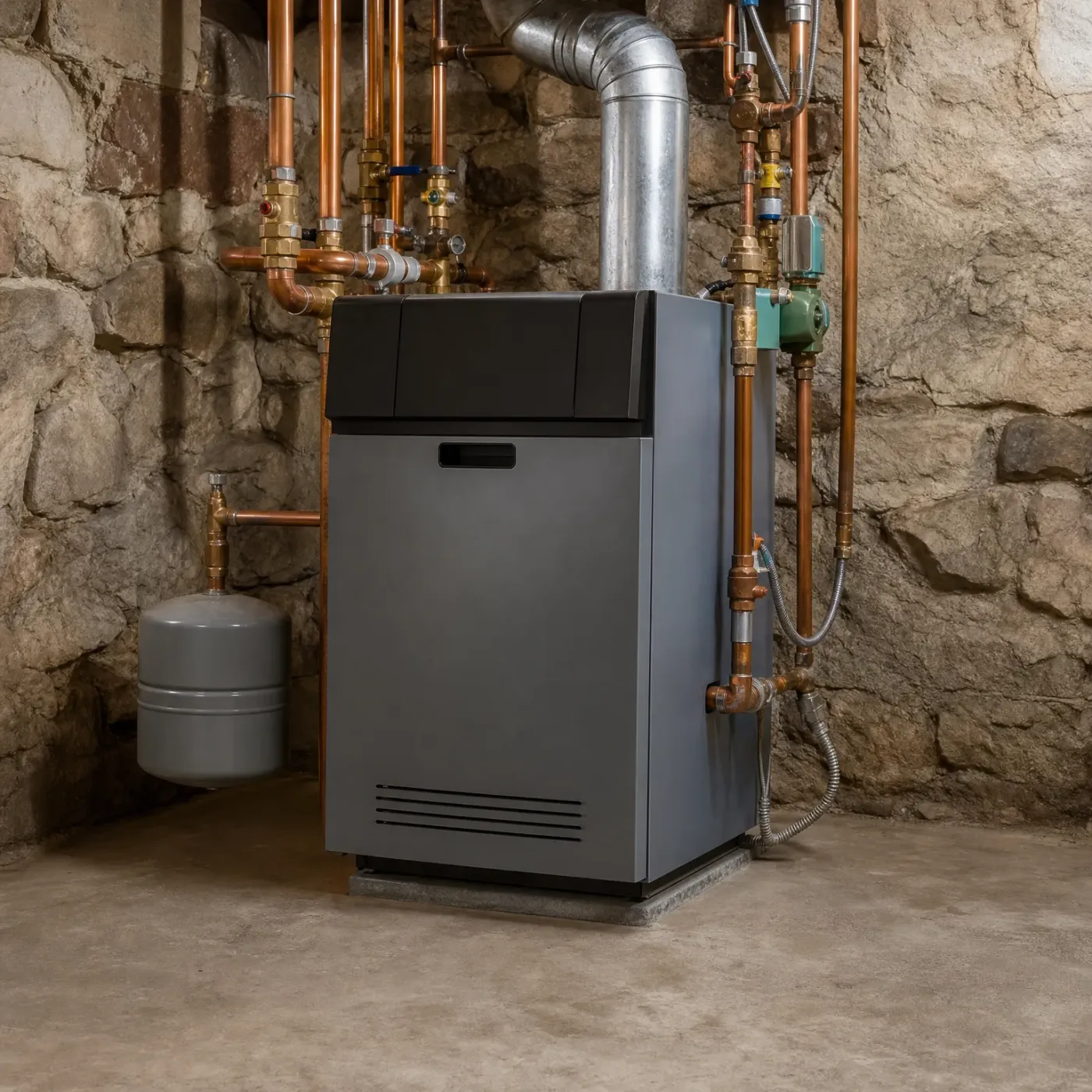
A gray residential boiler on a concrete pad in a basement with stone walls, connected to copper piping, brass valves, a circulator pump, an expansion tank, and a metal flue duct.

Still running steady

A boiler that holds pressure, fires without hesitation, and keeps every pipe and valve dry is doing its job. If yours still heats evenly through a New Mexico winter and the pump and fittings show no rust, a repair can make sense when something does go wrong.
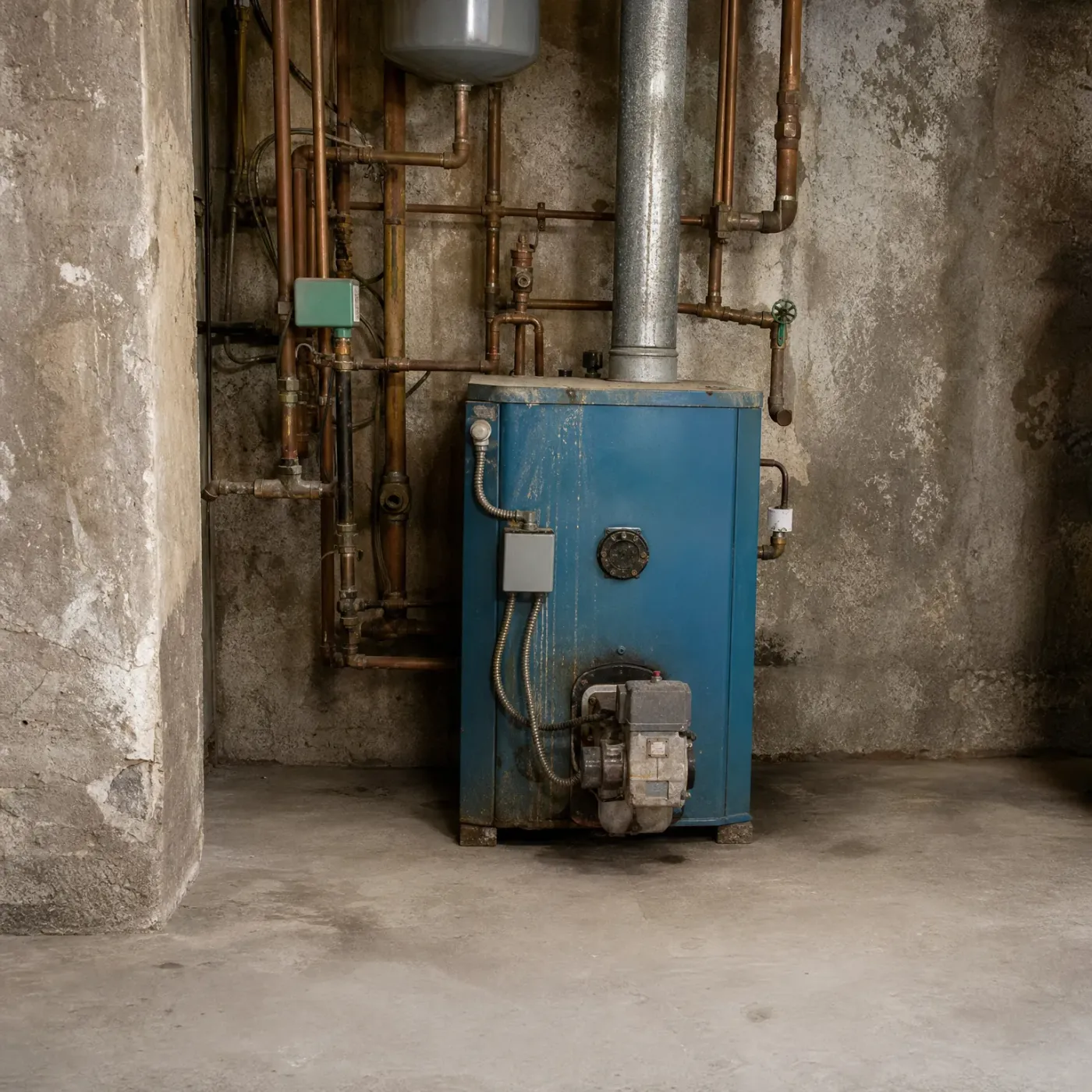

A blue cabinet boiler with a metal flue pipe and copper piping stands against a bare concrete wall in a basement with a concrete floor.

Showing its age

Scale on old fittings, a flue pipe that's rusted through, or a burner that struggles to light are signs the boiler is past patching. Once the unit itself is failing instead of a single part, replacement is usually what holds up through another winter.

A man seen from behind raises his hand to wave at a woman standing in the open front doorway of a single-story house with gray shingle siding, white columns and a gabled porch entry.

What an old boiler is costing you now

A boiler losing ground doesn't always quit outright. More often it just asks for more gas to do the same job, runs longer to get the house to temperature, and cycles on and off more than it used to. You'll notice it on the bill before you notice it anywhere else. Rooms that used to heat evenly start running cold at the far end of the house, and the pilot or igniter takes another try or two to catch.

If yours is already past one repair and into talk of a second, the smarter move is finding out what a replacement actually looks like for your house before the next cold snap decides it for you. A licensed contractor working in New Mexico sees these same boilers winter after winter and knows which ones are worth patching and which ones are done. Getting matched with one means someone familiar with your situation looks at your actual system, not a general case, and calls you directly.

A gray upholstered sofa with a textured cushion sits beside a dark round side table holding a vase of green foliage, with a table lamp and sheer-curtained window behind.
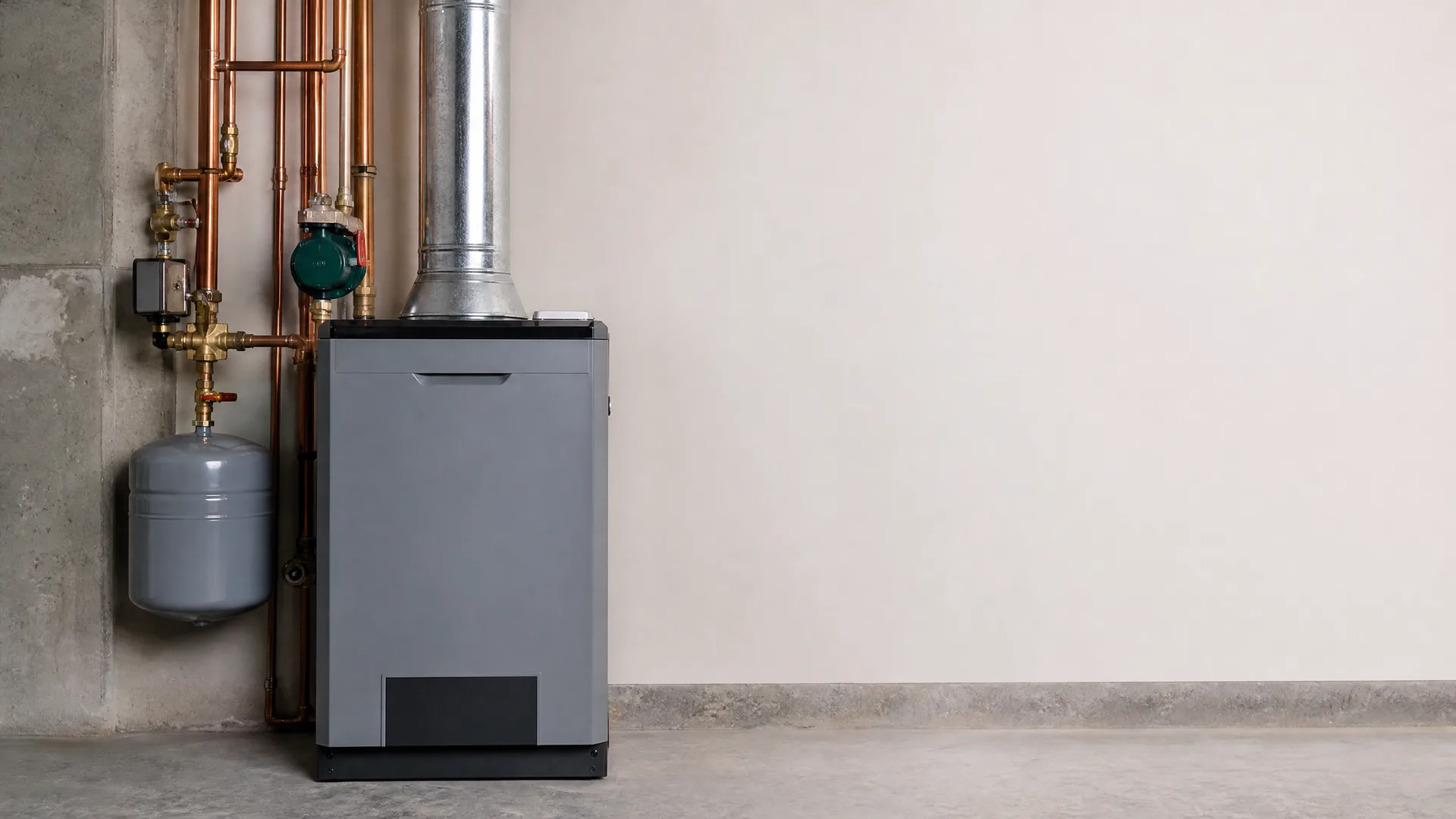
A gray floor-standing boiler with a metal flue pipe, copper piping, a circulator pump and a gray expansion tank, installed against a concrete wall.

How a boiler's heat exchanger fails

The heat exchanger passes heat from the burner into the water that runs through your pipes and radiators. Years of that cycle leave mineral scale and soot on both sides of the metal. Once it cracks or wears thin enough to leak, there's no patch for it. A new heat exchanger usually costs close to a new boiler, which is why that single part failing is often what ends a repair and starts a replacement.

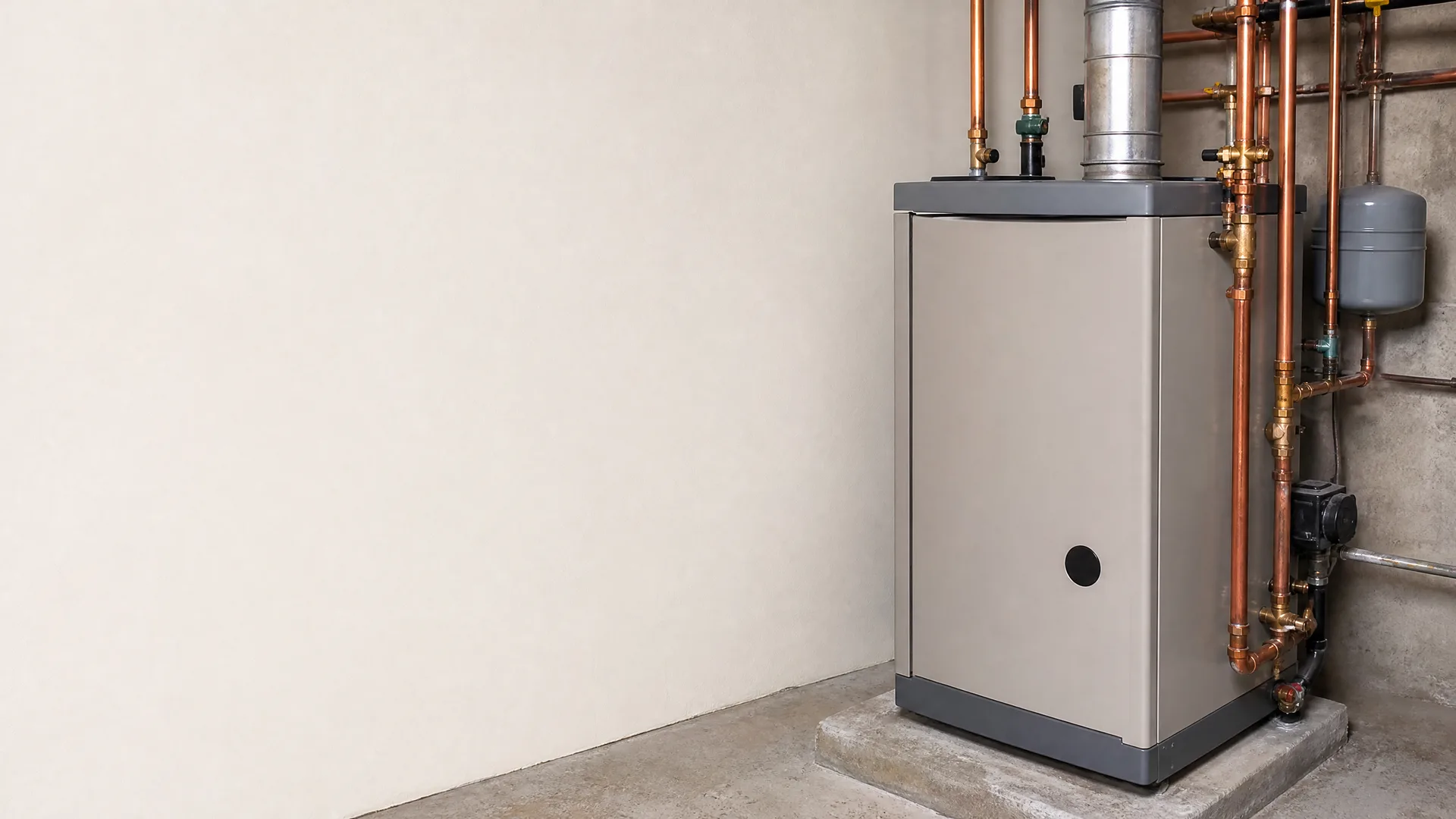
A tall grey floor-standing boiler on a concrete plinth in a corner of a room, with copper pipework, a flue, a circulator pump and an expansion vessel to its right, beside a plain cream wall.

What pressure and leaks tell you

Your boiler holds its water at a set pressure, and the gauge on the front tells you if it's holding steady. A unit that needs water added every few weeks, or shows rust at the fittings and valves, is losing water somewhere in the system. That water carries minerals that build up inside the pipes and the exchanger as it evaporates, which is part of why a leaking boiler often needs more than one fix before the season's out.

Winter nights average 23°F statewide

At 23°F on a typical winter night, your boiler has to keep firing most of the night just to hold the house steady. An old one that's losing efficiency ends up running longer stretches to do it, which is where a lot of that winter gas bill comes from.

NOAA nClimDiv 1991-2020 county normals weighted by homes

A gray-haired bearded man in a dark coat and scarf dusted with snow stands smiling in a dimly lit entryway with a white front door, a side table with a lit lamp, an oval mirror, and a patterned rug.
An older bearded man in a dark snow-dusted coat and gray scarf stands just inside a dimly lit home entry, with a framed picture, lit table lamp, and an adjoining room with a fireplace behind him, and snow visible through the open door.
A gray-haired, bearded man in a dark snow-dusted coat stands smiling in a dimly lit entry hall with a staircase, a lit table lamp, a framed picture, and a living room visible through a doorway.
An older man with gray hair and a beard, wearing a dark jacket dusted with snow, stands smiling in a dimly lit hallway with lamps and a living room visible behind him.

A pro who works on boilers

A boiler that needs a new heat exchanger, or that's old enough you're wondering what's next, puts you at a real fork. Replacing it is a bigger job than a repair call: new venting sized right, controls set up for the unit, a day or more of work in your house. Getting that done well matters more than getting it done by the first name in a search result. A local contractor who installs boilers in New Mexico homes all winter knows which models hold up to the dry heat here in the off months and the hard runs in January, and what usually goes wrong with an install that was rushed. Once you've decided replacement makes more sense than another repair, the next step is getting the right person looking at your boiler and your house, not a handful of estimates to sort through on your own. One contractor, matched to this job, is the one who can actually tell you what it needs.

Repair or Replace, Decided

  • A boiler that holds pressure and heats evenly through winter is worth repairing, not replacing.
  • One that needs a new heat exchanger or keeps running longer to hold the same temperature is nearing the end.
  • Gas bills that climb while the house feels the same are a sign the boiler is losing ground, not a sign of a cold winter.
  • A cracked heat exchanger or a unit old enough to raise that question is a replacement job, not another repair call.
  • Matching you with a local contractor who works on boilers all winter means someone who already knows what tends to fail in units like yours.
  • You get one contractor reaching out, not a string of calls to sort through.

A boiler that still holds pressure and heats your house evenly is worth another repair. One that needs a new heat exchanger, or runs longer each night to do what it used to do faster, is telling you it's near the end. The gas bill is usually the clearest sign. If it's climbing while the house feels the same as always, that's the boiler losing ground, not a hard winter.

Once you know which side of that line you're on, the next step is getting the right person to look at it. New Mexico winters put a real load on a boiler, and the contractor who gets matched to you is someone who works on these units all winter, in homes like yours, and has seen what tends to go first in a boiler your age. That's different from a general plumber who sees a boiler once a season. It's also one contractor reaching out to you, not several competing for the job, so you're not stuck fielding calls and comparing quotes from people who've never seen your system.

Whether the answer is a repair or a full replacement, the job is the same from here: get someone local who knows this equipment to look at what you have and tell you straight what it needs. You've kept the house running this long. This is the next thing on the list, not a bigger project than it needs to be.

At dusk, a dark board-and-batten house with a standing-seam metal roof and lit entry walkway of stone pavers, with two large outdoor heat pump units on a stone-walled pad at right and trees and hills in the background.

Boiler Installation

Get your boiler to the right pro

Step 1 of 3: Equipment
  • A corner of a room with an upholstered wood-framed armchair holding a floral pillow, a round side table with a ceramic lamp, books and a vase of greenery, a framed landscape painting on the wall, a patterned rug, and a sunlit multi-pane window.
    • Say what's going on with your boiler, and a pro who works on them reaches out.
    • A local pro who knows boilers gets your details and gets in touch.
  • Interior corner with a wood-framed window showing green foliage outside, a framed landscape print on a beige wall, and a rounded stone vase of leafy branches on a wooden cabinet.
    • Send the form and the search for an installer is over.
    • Send the request and finding a pro stops being your problem.
  • A pale ceramic vase holding olive branches sits on a dark wooden countertop beside a carved wooden dough bowl, next to a wood-framed window and a light painted plank wall.
    • Answer a few questions instead of calling shop after shop.
    • Describe your boiler job once, to one pro.
  • A dark wood round side table holding a brass lamp with a cream shade, a blue-and-white patterned bowl, and a white textured pot of greenery, beside an upholstered chair with a gray patterned cushion and a white-framed window showing green trees and flowering shrubs.
    • The pro who reaches out is licensed in New Mexico.
    • Only one pro gets your request, so you hear from one company.