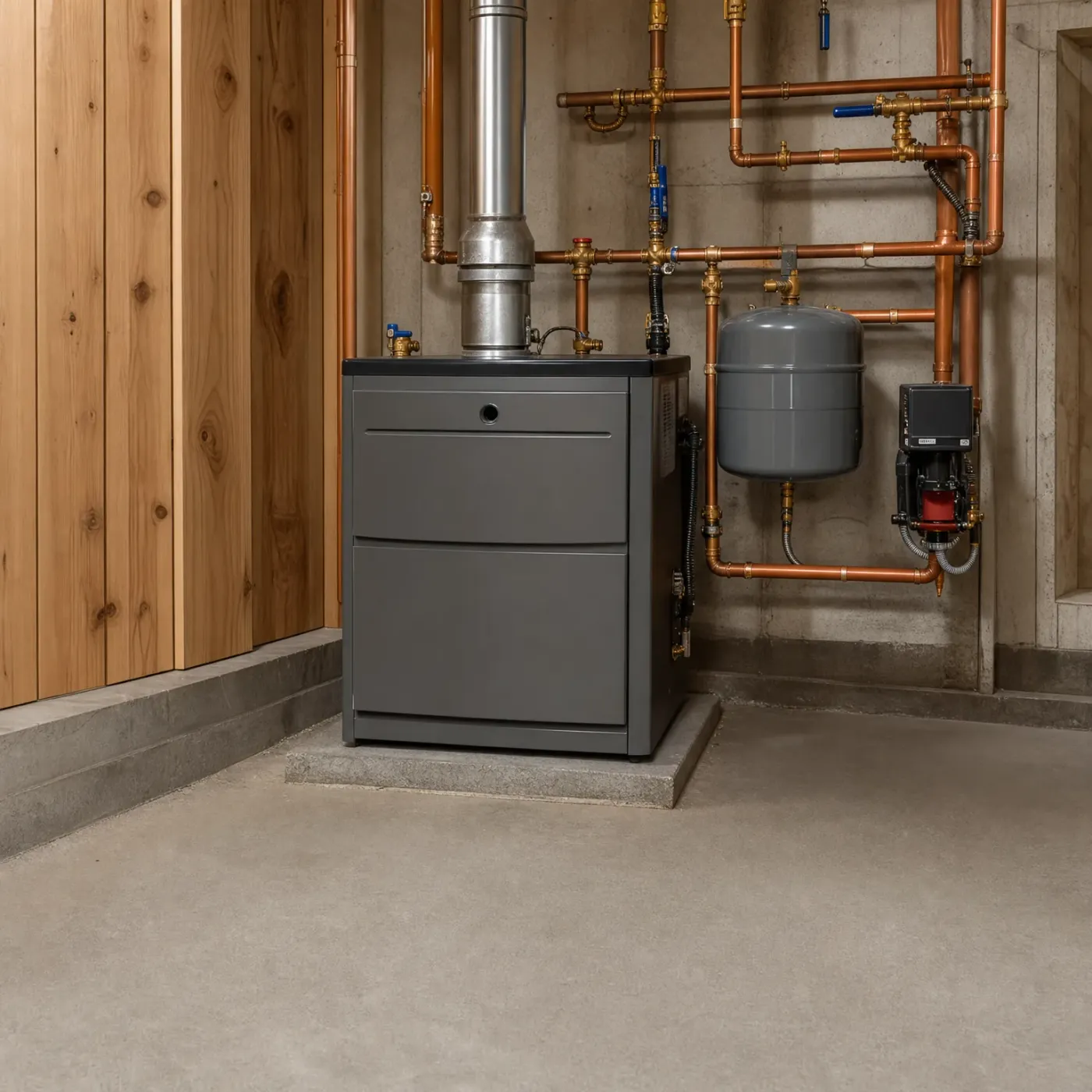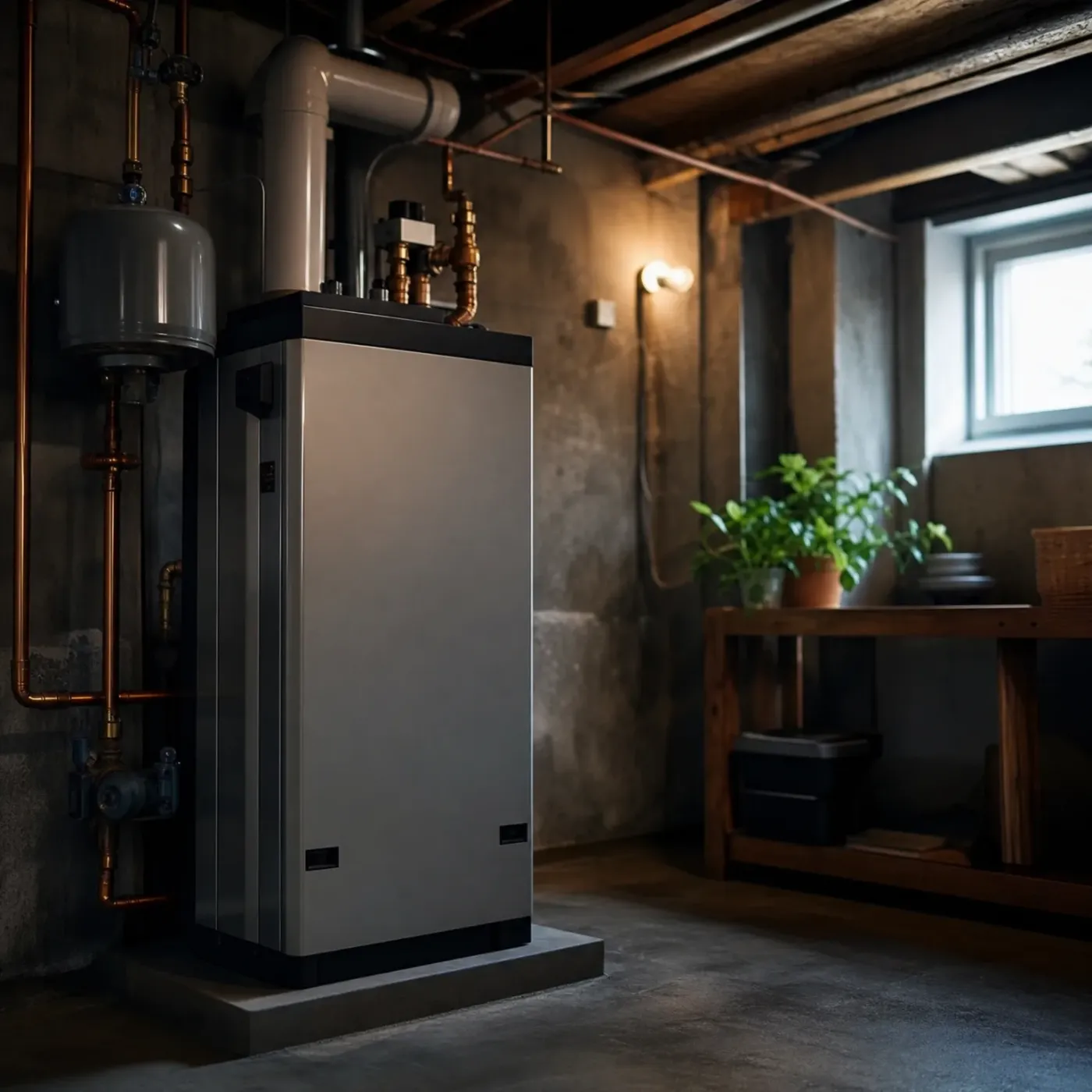






A floor-standing gray boiler unit on a concrete plinth in a basement, with copper pipes, an expansion tank, and a flue pipe above, a wall light, a small potted plant on a wooden shelf, and a window in the background.

Skip the search

What size boiler a New Mexico home needs

Boiler size depends on your home's heat loss, not its square footage alone, and getting it wrong means a boiler that short cycles or never keeps up on a cold New Mexico night. This page walks through what actually sets the right size. Below it, you can skip the round of calls to local companies and the same explanation over and over, and get matched with one licensed New Mexico contractor who sizes boilers for a living.

Skip calling around

There's no single boiler size for a New Mexico home, because the right size comes from a heat loss calculation, not your square footage. A contractor works out how much heat your house actually loses on the coldest nights it sees, based on your windows, your insulation, your ceiling height, and how the rooms are laid out. Two houses the same size can need different boilers because one holds heat better than the other. This matters more here than it might seem, since New Mexico winters can swing cold at night even after a warm day, and a boiler sized off square footage alone can end up too big or too small for that swing. Too big, and it short cycles, wearing out parts faster and heating unevenly. Too small, and it runs constantly without ever quite catching up. The only way to know your number is to have someone calculate it room by room, for your house specifically.

A gray-haired man in a dark sweater sits on a light gray sofa in a living room, looking toward a sunlit window with trees outside.
A gray-haired man in a dark blue sweater sits on a light gray sofa in a sunlit living room, looking off to the side, with a potted plant, shelving unit, and large glass doors behind him.
A bearded man with graying hair in a dark green sweater sits on a sofa in a living room, looking off to the side, with a sliding glass door and a dim kitchen doorway behind him.
A gray-haired man in a dark knit sweater sits on a light gray sofa in a living room, looking toward a sunlit window, with houseplants, a lamp, and framed art in the background.

Why does square footage alone not tell you the right boiler size?

You've seen the sizing charts online that just divide square footage by a number and spit out a boiler size. It seems reasonable, so it's fair to wonder why a contractor would need to do anything more than measure your house. The answer has to do with what a boiler is actually fighting against on a cold night, which square footage doesn't capture at all.

Square footage tells you how much space there is to heat, not how fast that space loses heat

Two New Mexico houses the same size can lose heat at very different rates. One has newer double-pane windows and good insulation in the attic. The other has single-pane windows from the 1970s and walls that were never upgraded. The second house will call for a much bigger boiler, even though the square footage on paper is identical. A heat loss calculation accounts for the windows, the insulation, the ceiling height, and how much of the house touches outside air. That's what tells a contractor how many BTUs your boiler needs to put out on the coldest night your area sees, not a flat number per square foot.

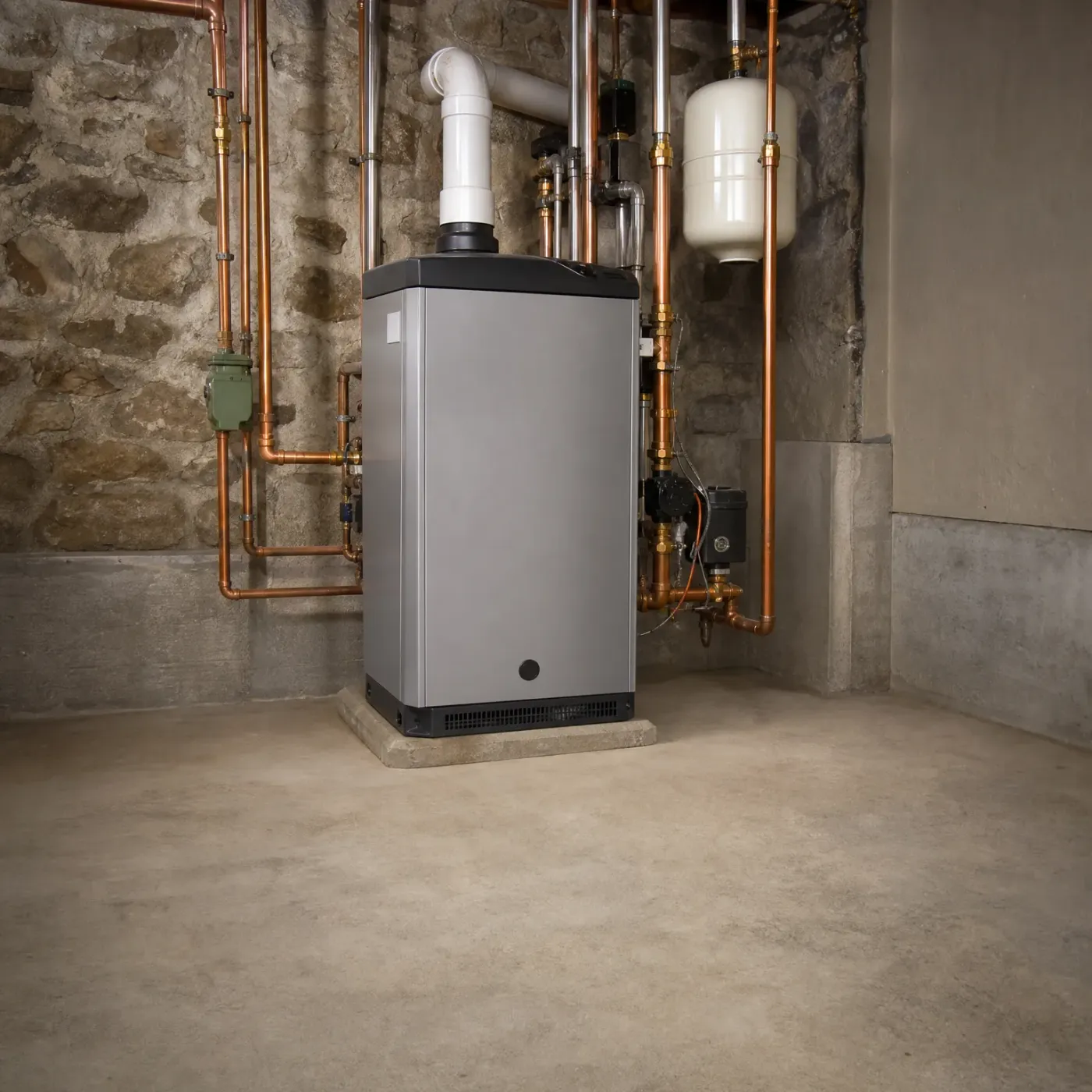
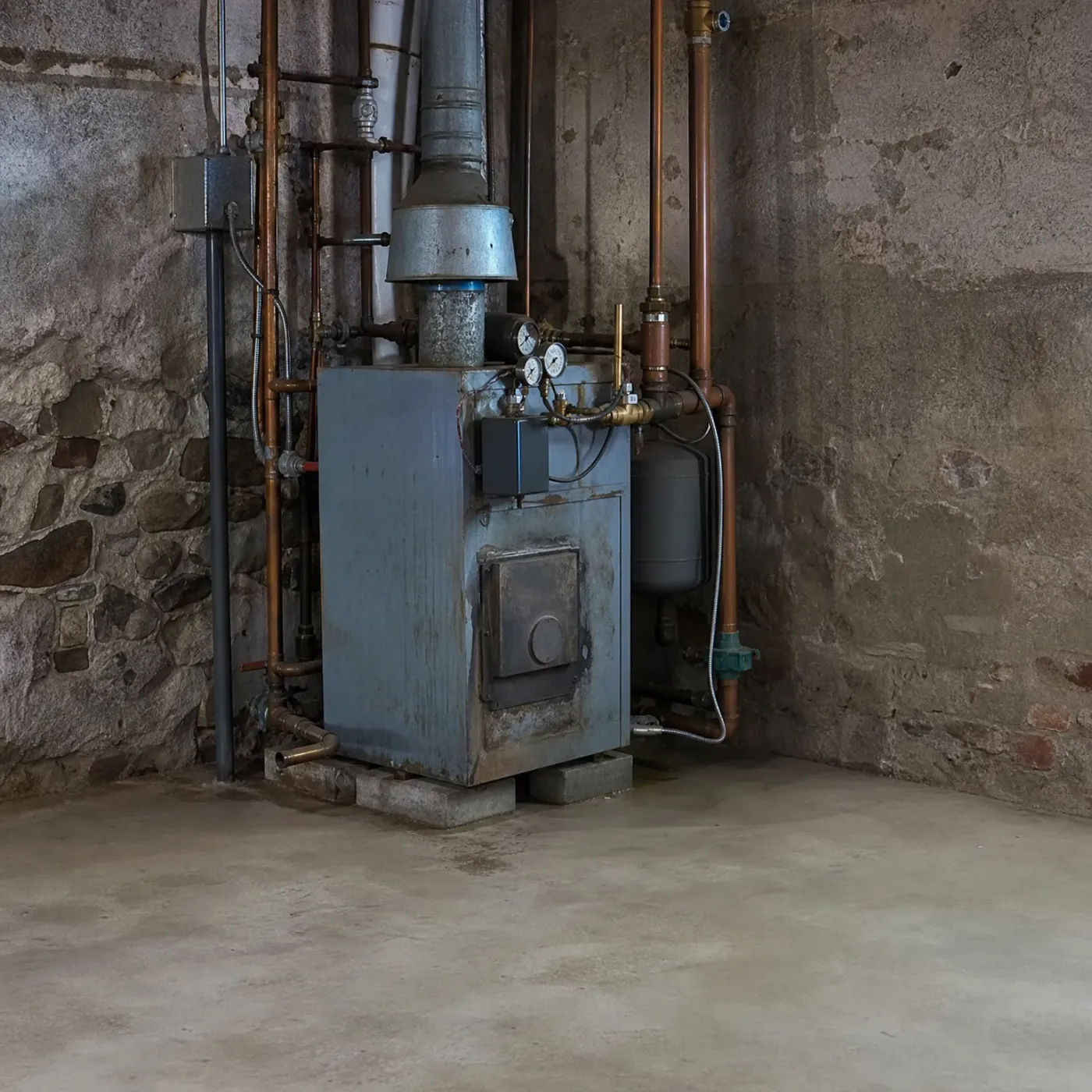
A gray floor-standing boiler on a concrete pad in a basement, connected to copper pipes, a white expansion tank, and a white PVC vent against a stone and concrete wall.
A boiler sized to your home's actual heat loss runs long, steady cycles and holds every room at temperature through a cold New Mexico night.
An older gray boiler with a metal flue, copper piping, pressure gauges and an expansion tank sits on concrete blocks in a basement corner with stone and concrete walls.
A boiler sized off a chart alone can short cycle or run constantly, and an old cast-iron unit like this one may be carrying the wrong size for decades.

You'd feel a wrong-size boiler before you understood why. The room at the end of the house stays cool while the thermostat says it shouldn't. The boiler clicks on and off more than it should on a mild evening, or it runs for hours straight on a cold one and the far bedrooms still don't catch up. Neither is free. Every start taxes the ignition system a little more, and a boiler that's cycling constantly is putting more starts through that system every day than one that's sized right. That's where trouble usually begins, not with some dramatic failure but with parts that wear out sooner than they should have. Gas use follows the same pattern. A boiler working against the wrong size, whether too big or too small, runs more than it needs to, and you pay for that runtime whether or not the house is actually comfortable. A boiler matched to your home's heat loss just holds steady through a cold New Mexico night, no strain, no cold corners.

What the Wrong Size Costs You

  • An oversized boiler cycles on and off fast, which wears the burner and controls sooner than they should.
  • An undersized boiler runs nearly nonstop on a cold night and still leaves far rooms cooler than the thermostat setting.
  • Short cycling pushes more starts through the ignition system each day, and that's where boiler failures usually begin.
  • A boiler sized to your home's heat loss holds steady heat through the coldest nights without strain.
  • Gas use tracks runtime, so a boiler fighting the wrong size works harder than one matched to the house.
  • The radiators or baseboards farthest from the boiler are the first place a sizing mismatch shows up.
A middle-aged woman with shoulder-length dark hair, wearing a gray cardigan over a cream top, sits in an upholstered armchair and looks toward a sunlit window, with a shelf holding framed pictures and a plant behind her.
A woman and a child wrapped together in a knitted gray blanket on a couch, with the child's head resting on her shoulder and a lit table lamp and houseplant in the background.

Explain it one time

A heat loss calculation isn't something you do once and remember. It depends on your specific house, and getting the right boiler for it means finding someone who will actually run the numbers instead of guessing off a chart. That usually means calling around to a few companies, explaining your house to each one, waiting on quotes, and trying to judge which contractor knows what they're doing from a phone call. Request a quote here instead and a licensed New Mexico contractor who installs and sizes boilers for homes like yours takes it from there. You talk to one contractor, not five, and you're not fielding calls from companies competing for the job while you're still trying to figure out what your house needs. Someone who works on this equipment through New Mexico winters knows what a cold night here does to an undersized unit and what oversizing does to a boiler's lifespan. That's who looks at your home next.

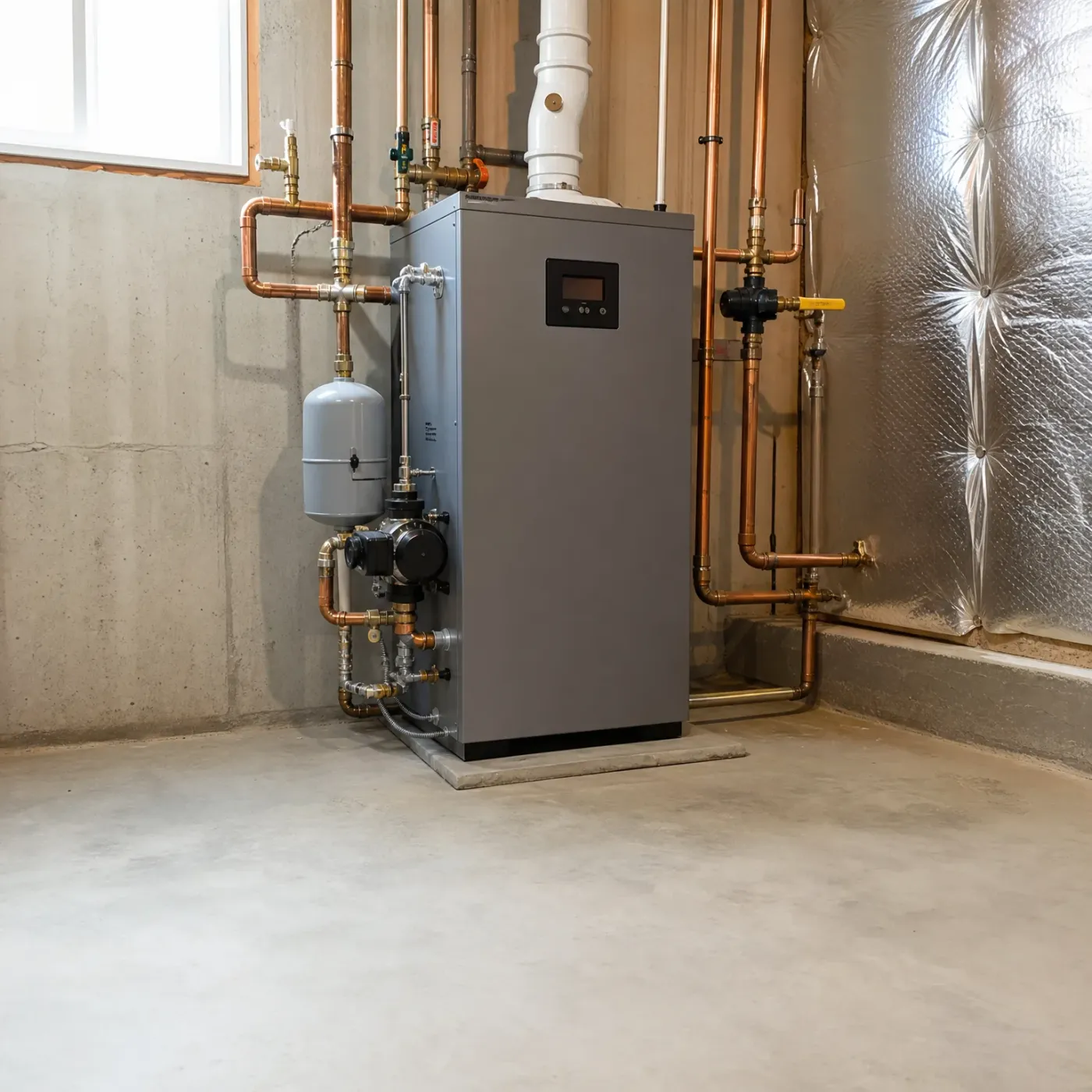
A gray boiler unit with a digital display stands on a concrete basement floor, connected to copper piping, a gas valve, a circulator pump and an expansion tank, beside a concrete wall and foil-faced insulation.

Properly sized and installed

This is what a right-sized boiler looks like, piped clean with its expansion tank, circulation pump, and flue vent set up the way the heat loss calculation called for. It modulates to match the load on a cold night instead of slamming on and off, and the installation itself holds up for years.
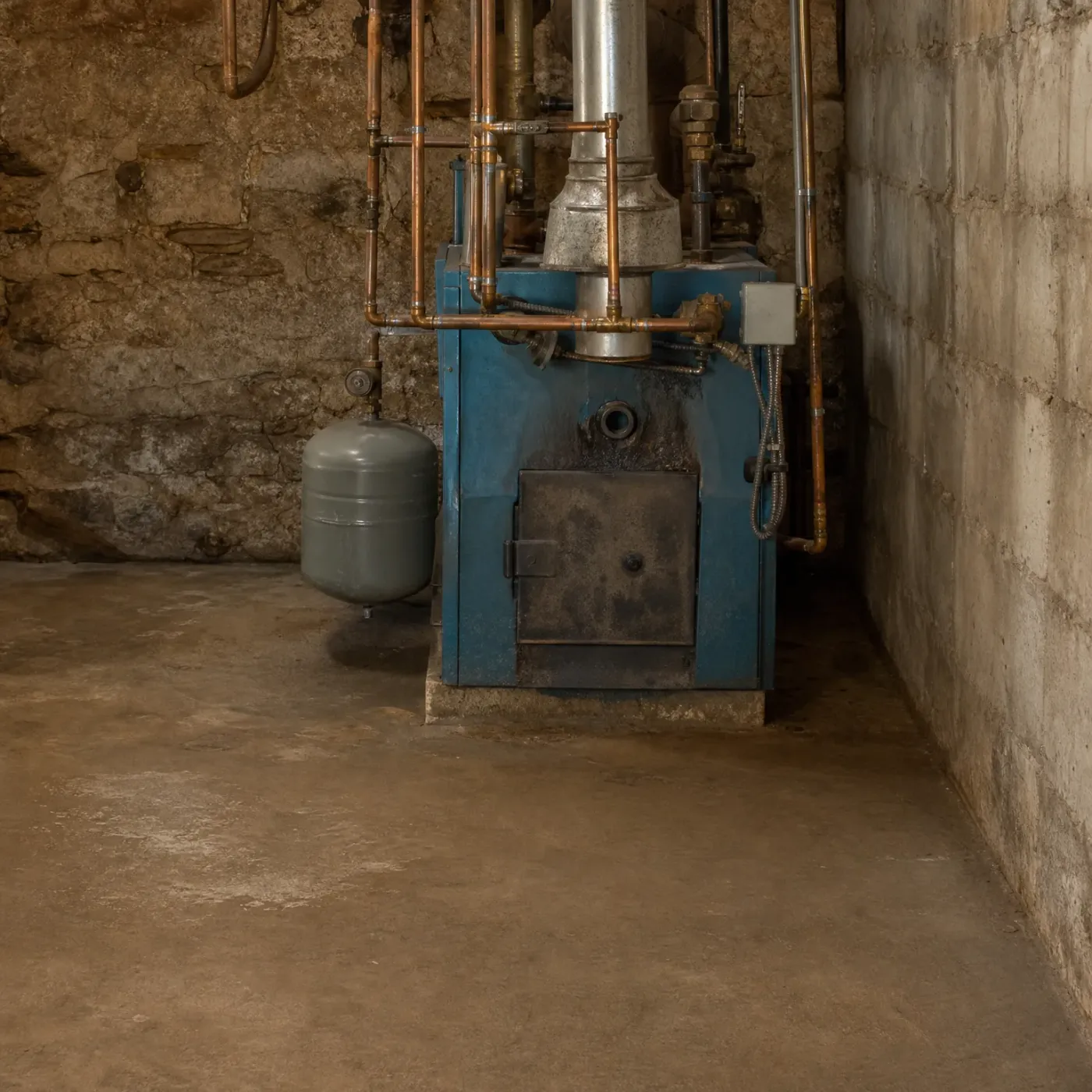
A blue cast-iron boiler with a metal flue pipe and copper piping stands against a stone and concrete block basement wall beside a gray expansion tank on a bare concrete floor.

Old, undersized, or failing

This cast-iron boiler shows what decades of running outside its proper range does. The access door is corroded, the expansion tank sits loose on the floor, and a unit sized off a chart instead of a heat loss calculation often ends up like this, straining against a load it was never matched to.

Winter nights average 23°F statewide

23°F is the average overnight low across your state in December, January and February, and some nights drop well past that. A heat loss calculation has to account for that cold, not a mild evening. It's part of why a boiler sized only off square footage tends to run short on the nights you need it most.

NOAA nClimDiv 1991-2020 county normals weighted by homes

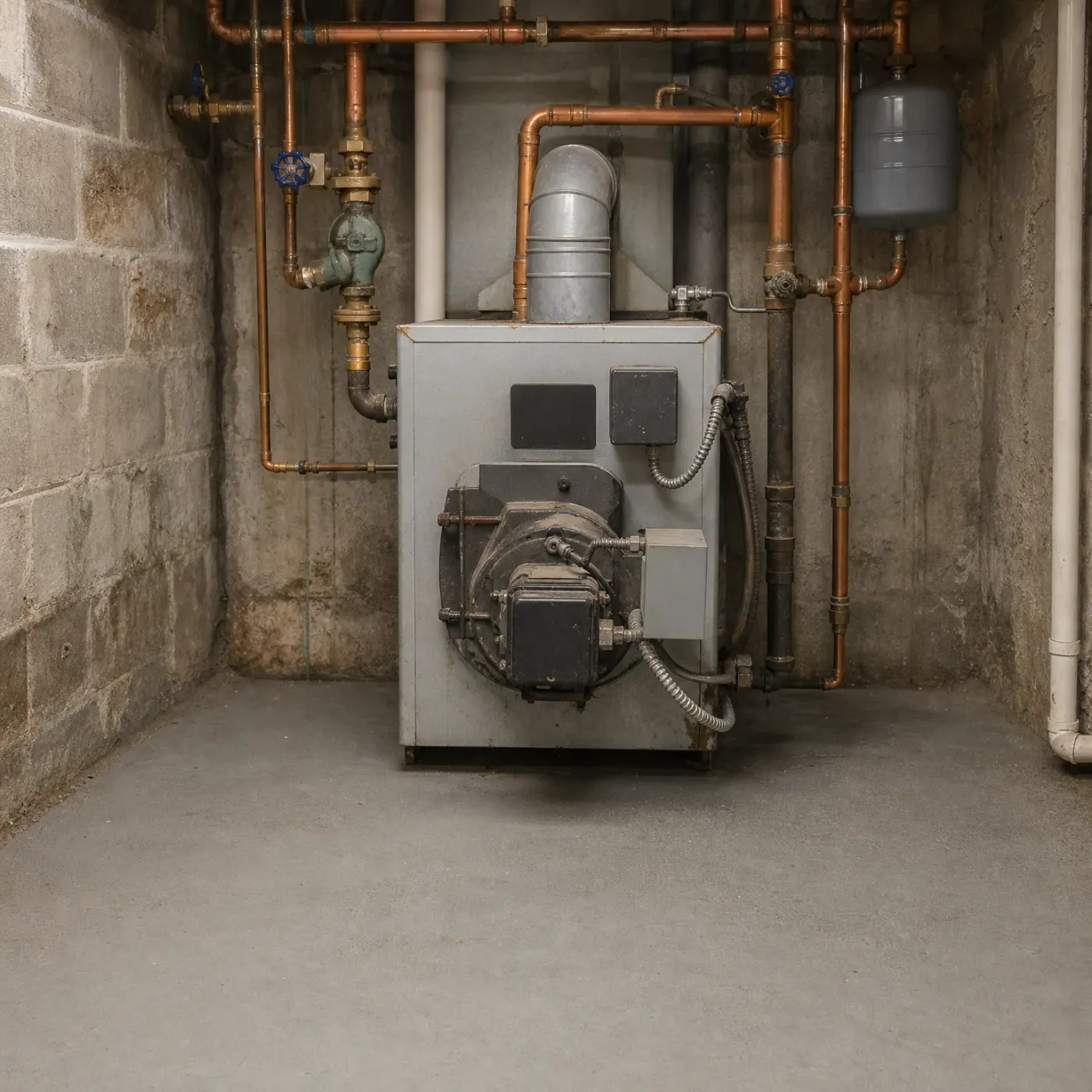
A gray boiler with a flue pipe and burner unit stands against a concrete block basement wall, surrounded by copper and steel piping, valves, and a gray expansion tank, on a bare concrete floor.
Before you get your boiler installation
A gray boiler on a concrete pad in a basement, with a metal flue pipe and copper piping, brass valves, a gray expansion tank and a circulator pump mounted on the concrete wall beside wood paneling.
After you get your boiler installation
  1. A contractor measures every wall, window and door for heat loss.

  2. That load gets calculated room by room, not just for the whole house.

  3. The contractor adds up total heat loss in BTUs for the coldest night.

  4. A boiler is chosen that matches that BTU load, not your square footage.

A closed dark laptop and a ceramic mug of coffee on a wooden dining table, with wooden chairs, a dark kitchen cabinet with cutting boards and a potted plant, and a leafy plant by a window in the background.

The right boiler is the one sized to your house, not a chart

Your home needs a boiler matched to what it actually loses on a cold night, worked out room by room from your walls, windows and doors. That number, not your square footage, is what decides the right size. A contractor who skips that step is guessing, and you're the one who lives with an undersized boiler or an oversized one for years after.

Getting there means finding a contractor who will run that calculation instead of reaching for a chart, which usually means calling around, explaining your house more than once, and sorting through quotes that may not even be sized the same way. Requesting an installation here puts you in touch with one licensed New Mexico contractor who sizes boilers for homes like yours all the time and knows what the cold nights here actually demand. No other companies calling, no repeating yourself. You'll know your boiler is sized for your house, not someone's spreadsheet.

Interior corner with a beige sofa holding a dark green and a light cushion and a textured throw, a potted small-leaved tree beside a white-framed window, and a dark shallow bowl on a wooden coffee table in the foreground.
A single-story stucco house at dusk with a lit paver walkway lined by low path lights, desert plants and boulders in front, and distant mountains under an orange and blue sky.

Boiler Installation

No quotes to chase

Step 1 of 3: Equipment
  • A beige upholstered armchair with an olive cushion sits in a sunlit corner beside a wooden side table holding a ceramic vase with leafy branches, under a framed abstract artwork, on a woven rug over a wood floor.
    • A local installer who puts in boilers gets your project.
    • Get in touch with a local installer about a new boiler.
  • A gray outdoor condenser unit on a concrete pad surrounded by dark gravel, beside a dark wood-sided wall with an electrical disconnect box and a stone veneer wall with a small evergreen shrub.
    • One request ends the search for a boiler installer.
    • Once you send the form, finding a pro is off your list.
  • A beige upholstered oversized armchair with a matching cushion and a knit throw draped over one arm, beside a round wooden side table holding a vase of greenery near a curtained window, with a framed landscape print on the wall and a woven rug on a wood floor.
    • Skip collecting and comparing quotes for the new boiler.
    • Skip searching for a boiler pro and answer a few questions instead.
  • Sunlit living room corner with a beige upholstered sofa, cushion and knitted throw, a round wooden side table holding a white ceramic vase of leafy branches and a small wooden bowl, a framed landscape painting on the wall, and a window at right.
    • Your request goes to one pro, not a list of companies.
    • The pro who reaches out is licensed in New Mexico.