0.433 psi per foot of height
That is how much pressure it takes to push water up one foot. A two-story house with radiators upstairs needs more cold pressure than a single-story slab home.
Skip calling around
Most boilers want to sit between 12 and 15 psi cold, but the right number depends on your system and what floor it has to reach. Too low and it shuts itself off. Too high and it weeps from the relief valve. Below, what your gauge should read and when a drop or a climb means something is wrong, so you're not stuck calling around and re-explaining the problem to find out.
Skip the callsA cold boiler should read between 12 and 15 psi on the gauge. That range keeps enough water pressure in the system to push hot water up to your radiators without tripping the low-pressure switch, which shuts the boiler off as a safety measure. If your house has more than one floor, the gauge usually needs to sit toward the higher end, since the water has farther to climb. Once the boiler fires and the water heats up, the needle will climb a few psi on its own as the water expands, then settle back down as it cools. A reading under 12 means air or a leak has let pressure out somewhere in the system. A reading that creeps past 20 will usually send water out through the relief valve, which is the system protecting itself from a bigger problem.


That is how much pressure it takes to push water up one foot. A two-story house with radiators upstairs needs more cold pressure than a single-story slab home.
Most relief valves open around 30 psi. A boiler running that high is losing water somewhere or has too much air trapped in the system.
You top off the gauge and a week or two later it's back down near zero, or the boiler won't fire at all until you add water again. Maybe you've noticed a damp spot near a radiator valve, or a thin crust of white mineral where a fitting weeps a little at a time. Some houses lose pressure slow enough that you only catch it when the heat doesn't come on some morning. A system that keeps needing water is losing it somewhere, and left alone that same leak can corrode a fitting or the boiler itself, which costs a lot more to put right than the drip did.
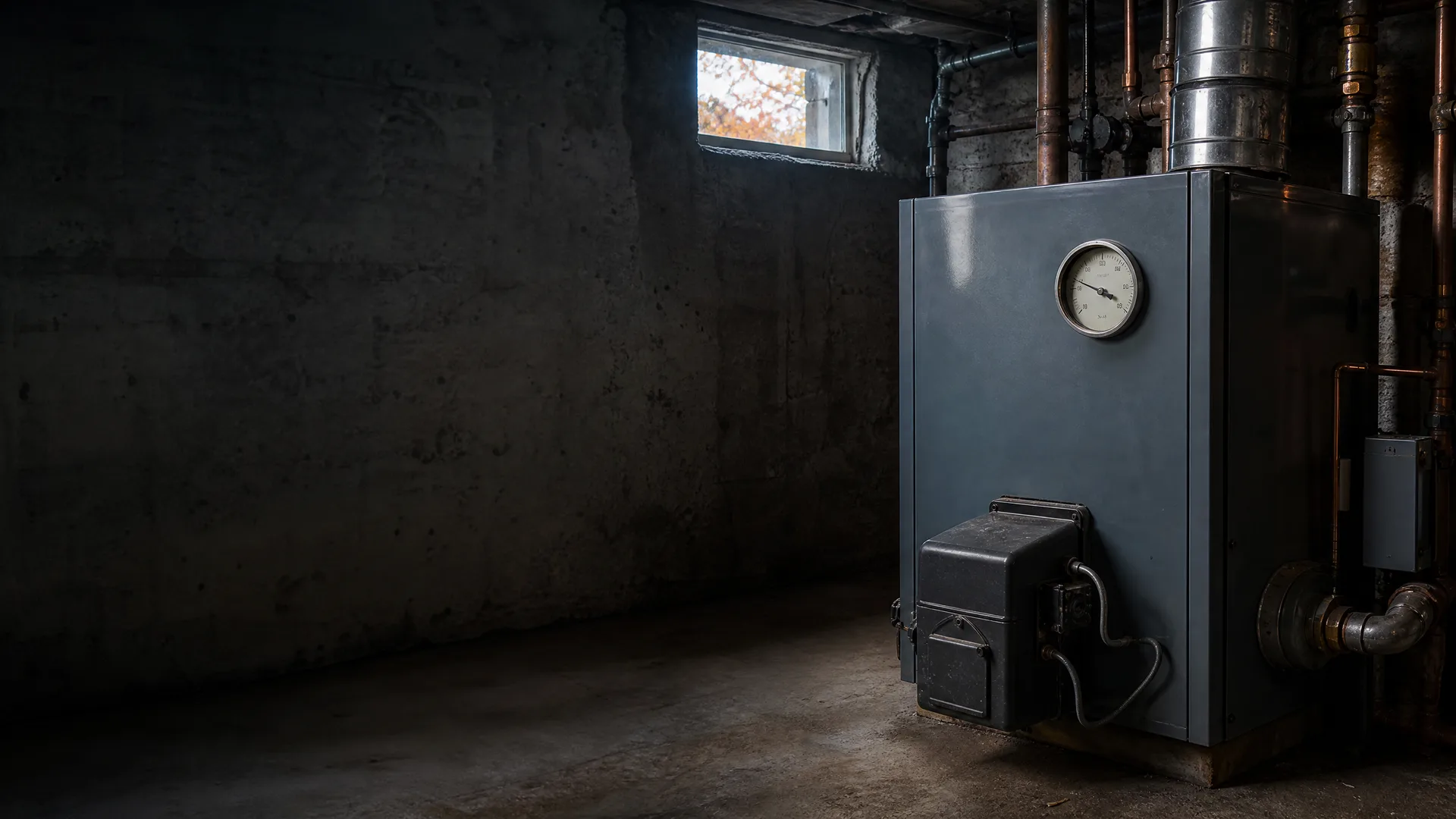
The furnace room stays cool even in October, the one month the swamp cooler is finally off and the gas boiler hasn't started its real work yet. You go down to grab the Halloween decorations and the gauge catches your eye, the way it does now that you've started checking it. The needle sits under 10, closer to 5. No puddle on the floor, no rust streak down from the relief valve. It just lost pressure quietly, the way it's done twice before this year. You set the bin down, crouch by the feed valve, and start turning it slow, watching the needle climb back toward 12, trying to remember exactly where it stopped last time.

Pressure holds steady, the gauge sits where it should, and the pump moves water through the loop without strain. Nothing drips from the fittings. This is what a system looks like when it isn't losing water anywhere.

The gauge on the front reads low, and the burner won't stay lit until someone adds water. A flue this size moves a lot of exhaust, and a boiler that short-cycles because of pressure problems is working harder than it needs to.




A licensed local pro takes the request for your boiler tune-up.
You only hire the pro if you want to.
You find the feed valve, add water until the gauge reads around 13 psi, and bleed a radiator if there's air knocking in the pipes. That buys time. But if pressure dropped once, it will drop again, and you won't know if it's a loose cap on the expansion tank, a relief valve that opens a little too soon, or a fitting weeping somewhere behind a wall. Doing this every few weeks all winter means you're guessing at a problem you can't see, and a boiler that keeps running low on water wears its parts faster.
A local contractor who services boilers all winter knows where New Mexico systems usually lose their water, whether that's the expansion tank, a valve, or a fitting that's been seeping slowly enough to miss. One visit finds the actual cause instead of you refilling the gauge and hoping it holds. You call once, talk to one person who already knows what to check, and get an answer instead of a guess. No sorting through several companies or explaining the same drop in pressure twice.


You keep the pressure right yourself, for a while. You refill the gauge, bleed a radiator, write the number on a sticky note by the furnace room door so you remember where it sat last time.
A local contractor who services boilers all winter can trace why it's dropping instead of guessing. One visit, one company, someone who already knows what usually fails in a gas boiler built to climb a New Mexico house in February.
Winter nights here average 23°F, cold enough that your boiler is working to push heat up through every radiator, not just idling. At that pressure demand, a gauge that's already low cold has less room before the low-water cutoff trips and leaves you without heat.
NOAA nClimDiv 1991-2020 county normals weighted by homes
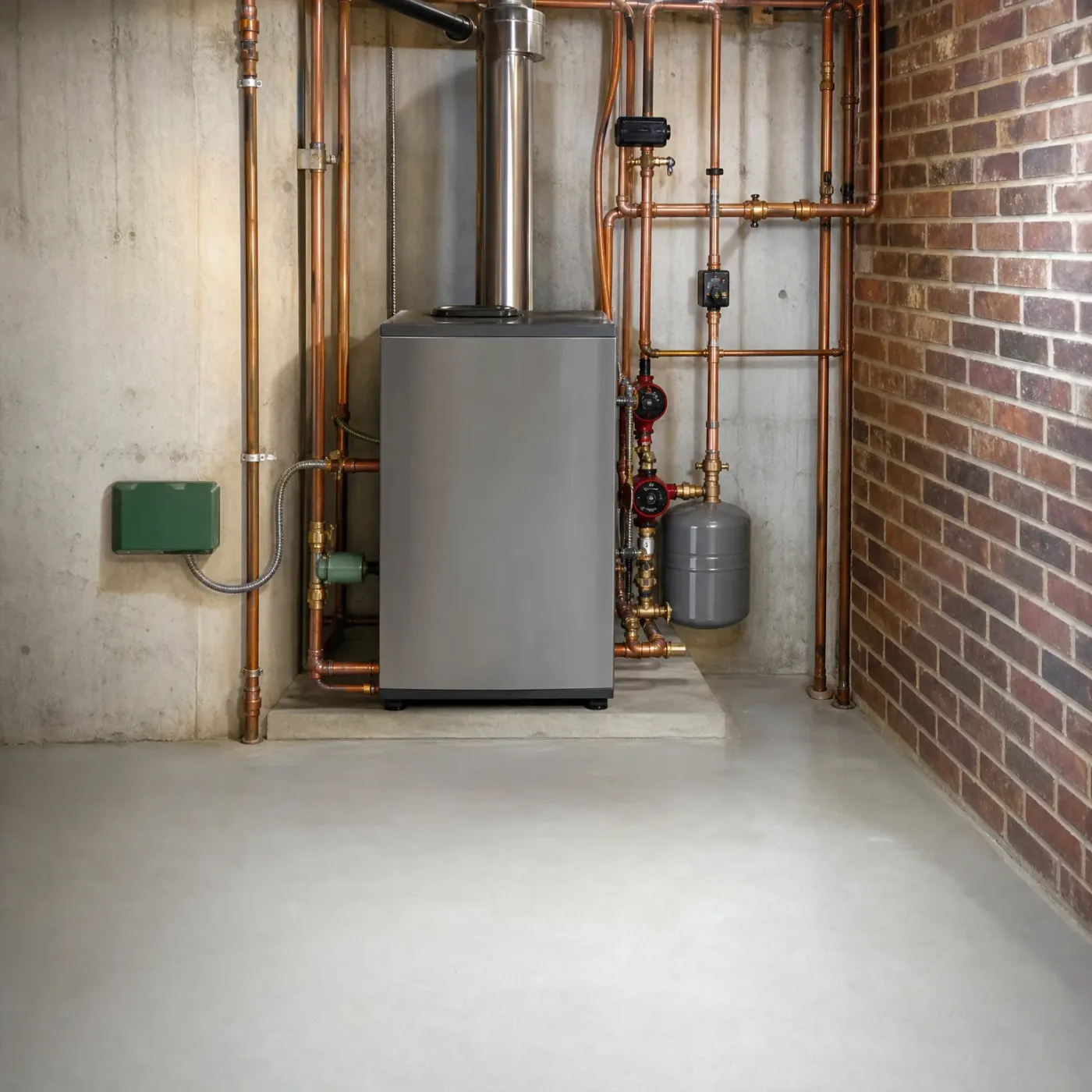
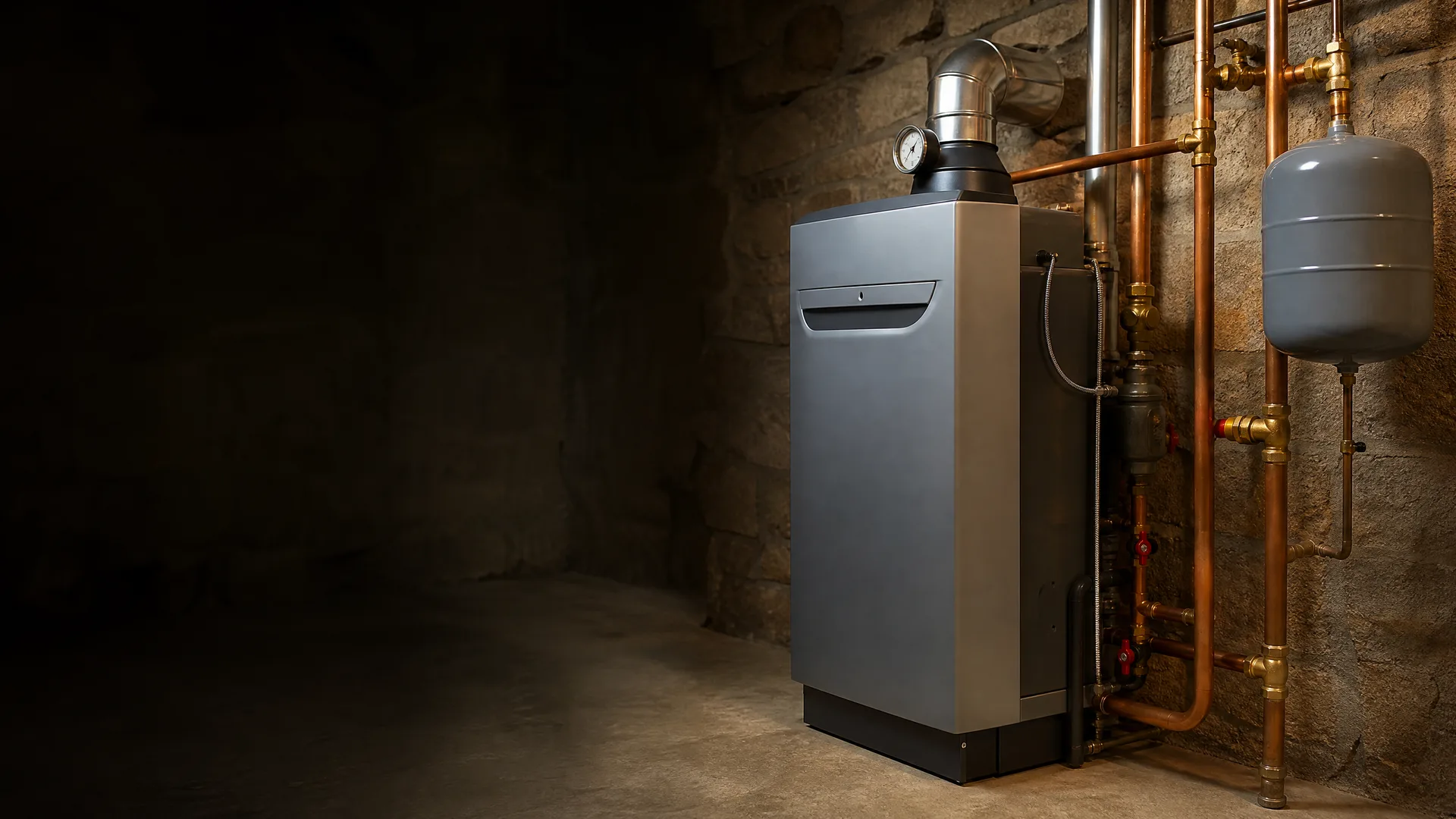
This is what a mechanical room looks like when the boiler isn't fighting itself. The gauge sits in range, the circulation pumps move water without strain, and the fittings stay dry. Nothing here is a mystery to a contractor who services this equipment every winter.
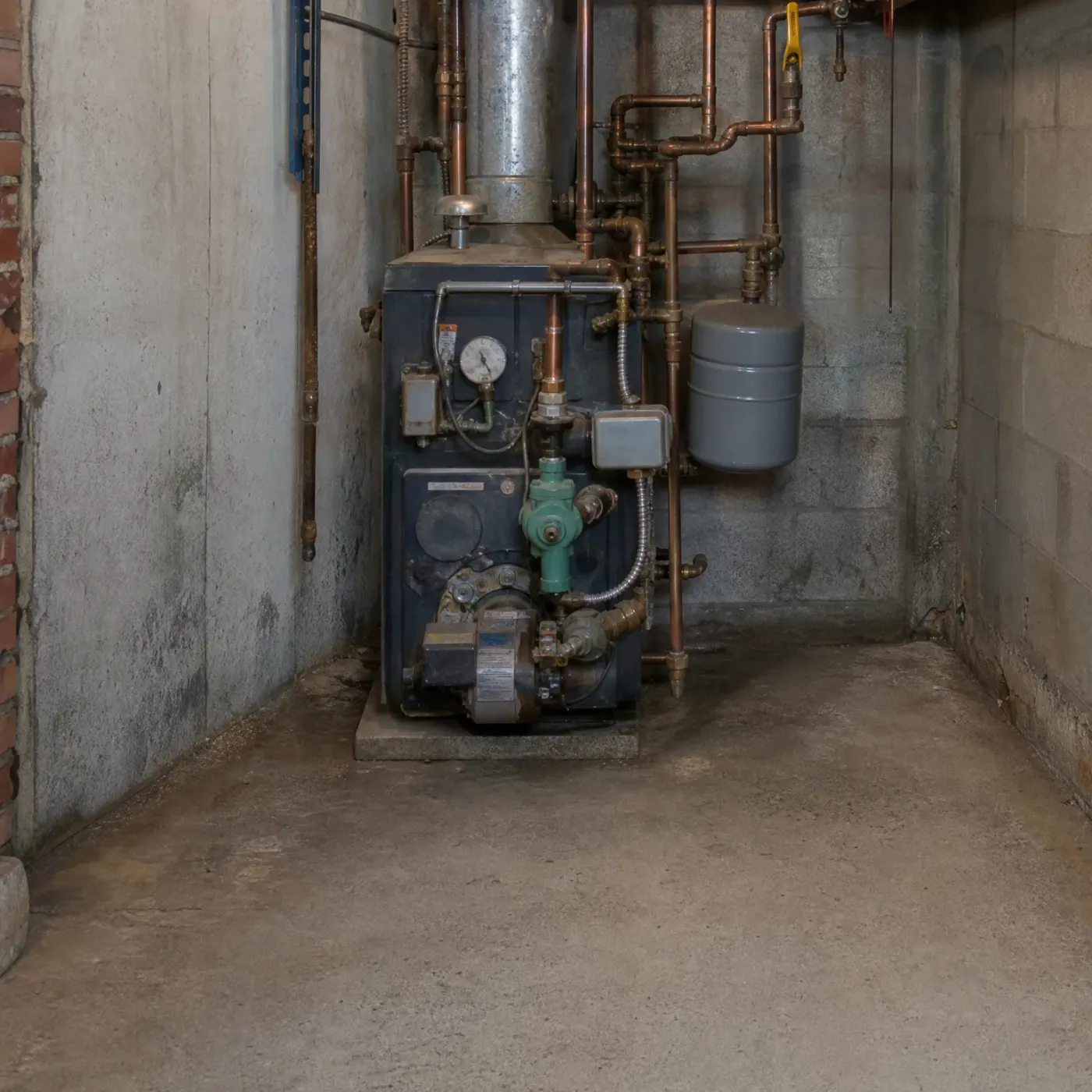
An older boiler like this one has had more chances for a joint to weep or a valve to seep. The gauge is the first place to look, and on a unit this age, low cold pressure often means it's been losing water somewhere for a while.
How do you tell if it's the expansion tank or just low water?
Add water until the gauge reads 13 psi and watch it over the next day. If it holds, you were just low, probably from a bled radiator or a small weep somewhere. If it climbs past 25 or 30 psi when the boiler fires and drops back down when it cools, the expansion tank isn't doing its job anymore. That tank holds an air cushion that gives the heated water somewhere to go. When the bladder inside fails, water fills the space the air used to hold, and pressure swings hard between heating and idle instead of sitting steady. A contractor can check the tank's air charge directly with a gauge at the valve on top, without draining the system to find out.

Winter nights average 23°F statewide, according to NOAA climate data. That's cold enough that your boiler is running long cycles most of the night, not just kicking on now and then. A system working that hard needs its cold pressure sitting in the right range before the cold sets in, because every bit of heat it pushes up to the radiators draws on that reserve. If the gauge was already low going into winter, you'll likely see it first on the coldest nights: the boiler short-cycling, a radiator that stays lukewarm upstairs, or the low-pressure switch tripping and shutting things down until someone adds water.
NOAA nClimDiv 1991-2020 county normals weighted by homes

Cold, your boiler should read 12 to 15 psi. If it's dropping below that on its own, something is losing water, whether that's a relief valve letting go at the top end or a fitting weeping somewhere you haven't found yet. A contractor who services boilers all winter can pressure test the system and tell you which one in a single visit, instead of you guessing from a sticky note on the furnace room door.
That's the choice in front of you. Keep topping off the gauge yourself and hope it holds, or get someone out who can find why it's dropping and fix that instead. You'd otherwise be the one calling around, explaining the same gauge reading to three different companies, and sorting through quotes that may not even be looking at the same problem. One call to a local contractor who already knows what tends to fail on these systems skips all of that, and you get a straight answer about your pressure instead of another number to write down.

One form, no calling around
