
Why your boiler is leaking water in New Mexico

Step 1 of 3: Equipment

A leaking boiler usually means a bad seal, a loose fitting, or too much pressure built up inside the system, and it's pushing water out somewhere it shouldn't. The pressure relief valve is a common source. It's built to open and let water out when pressure gets too high, and once it opens it doesn't always reseat cleanly, so it keeps dripping after. Pipe joints and the circulator pump are the other usual places, especially where a seal has dried out or a fitting has worked loose over years of heating and cooling. In New Mexico, your boiler probably runs hard through the winter and then sits idle most of the summer, and that swing between running and sitting still is hard on seals and joints, so leaks often show up right as the system starts up again in fall. Left alone, the leak can damage the boiler itself or whatever it's sitting near. It needs a licensed plumber or HVAC contractor to find the exact source and fix it, not just mop up the water.

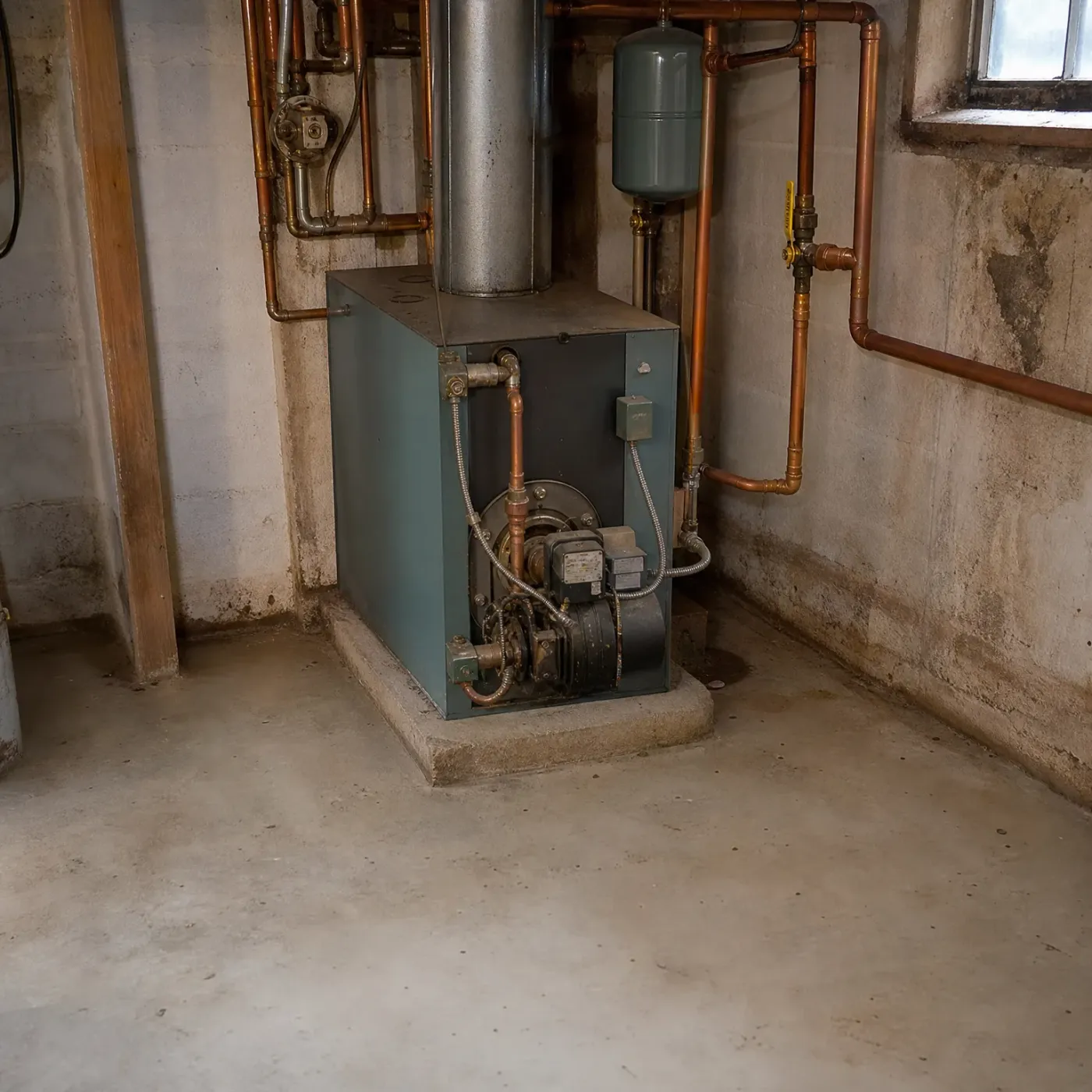
A dark grey floor-standing boiler on a concrete floor in front of a plywood wall, with copper pipes, valves, a pressure gauge, a flue pipe and a white expansion tank above it, beside a plain light-coloured wall.

Where the leak usually starts

The pressure relief valve sits near the top of the tank and opens when pressure inside gets too high. Once it opens, water runs down a discharge pipe toward the floor. A valve that drips now and then is doing its job. One that runs steady, or that drips even after pressure drops back down, has worn out and needs replacing before it lets go completely.

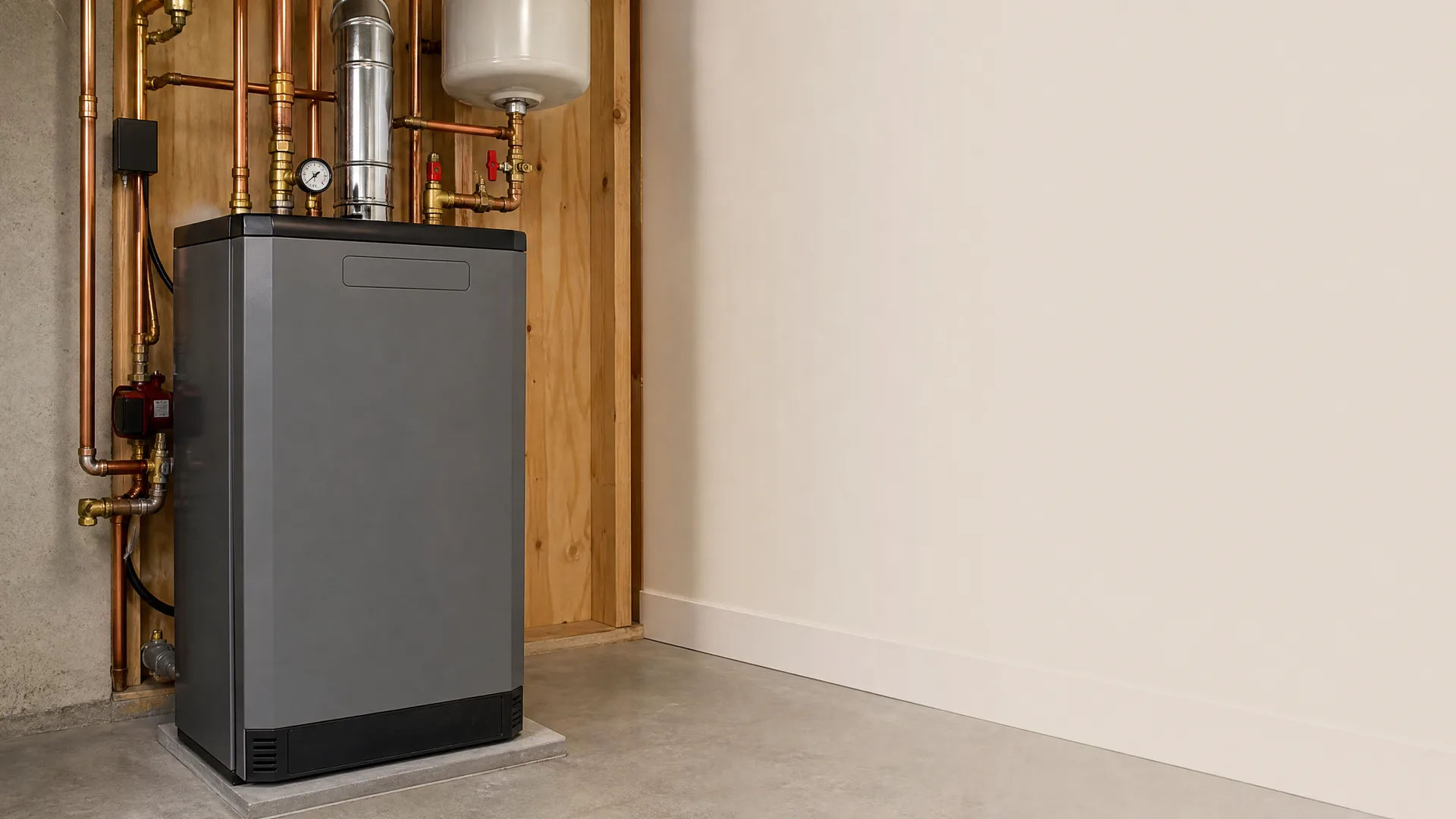
A gray boiler unit with a metal flue pipe stands in a basement corner, surrounded by copper piping and an expansion tank against a plain light wall and concrete floor.

Why dry heat matters here

New Mexico summers are hot and dry, and that dryness pulls moisture out of gaskets and seals even when the boiler sits unused for months. A seal that dried out over summer can crack or shrink just enough to let water through once the system fires back up for the season. That's a different cause than a pressure problem, and it calls for a different fix.

What's that water doing near your boiler

You might have noticed a damp patch on the floor near the tank, or a drip that comes back no matter how many times you wipe it up. Maybe there's a rust-colored stain running down the side of the boiler, or a puddle that only shows up after the heat has been running. You might hear a faint hiss or see water pooling around a fitting or valve. None of that goes away on its own. Left alone, that water can rust out the tank from outside, corrode nearby wiring, or warp the floor underneath. The leak itself is usually small. What it sits on top of is the part worth catching early.

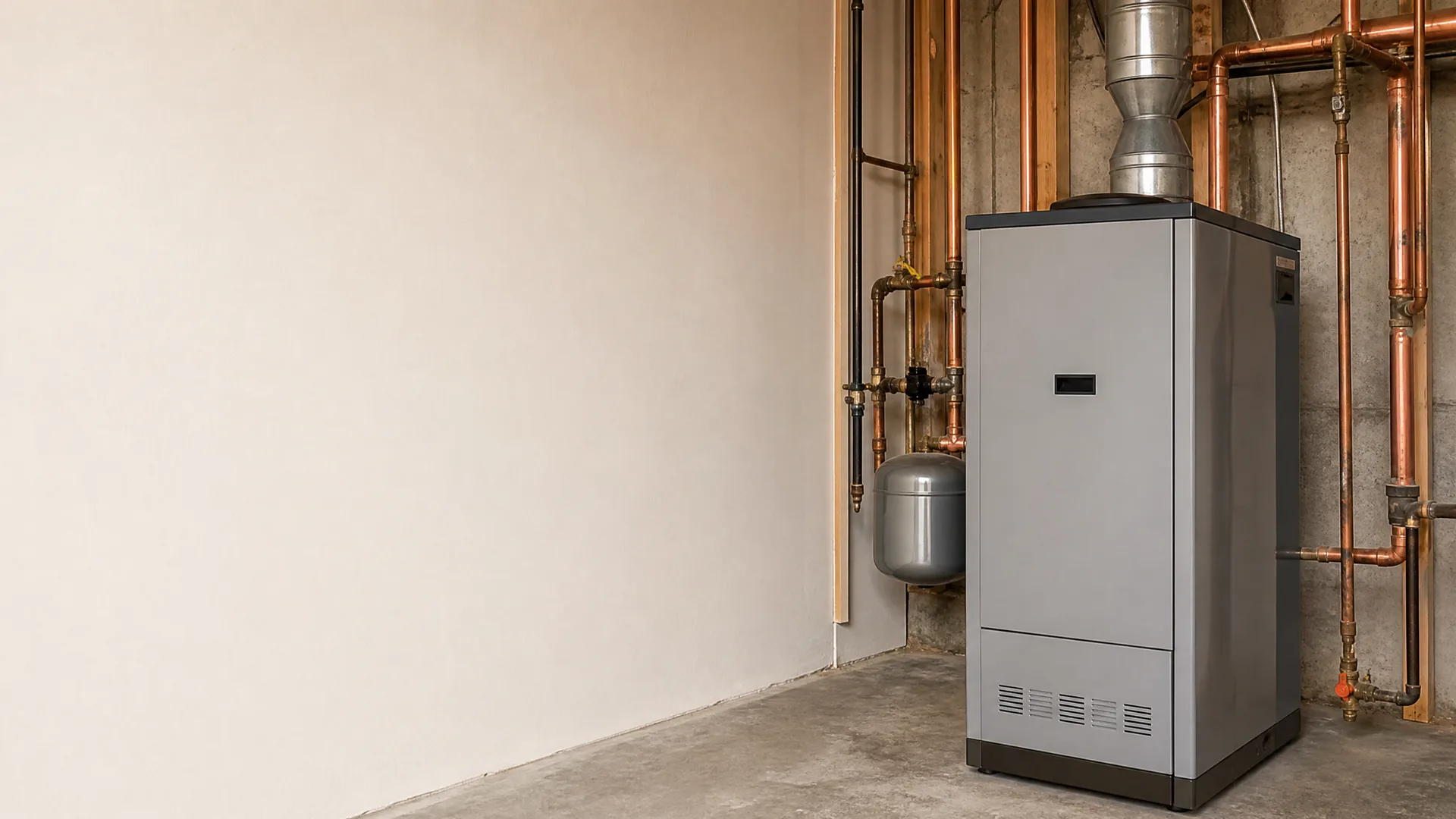
A gray boiler unit on a concrete pad in a basement corner, connected to copper piping, valves and a metal flue against painted concrete block walls.

Running the way it should

A boiler like this holds steady pressure, the fittings stay dry, and the expansion tank is doing its job absorbing the swings in pressure as water heats up. No drips on the pad, no rust starting on the fittings, no sound of water hitting the floor.


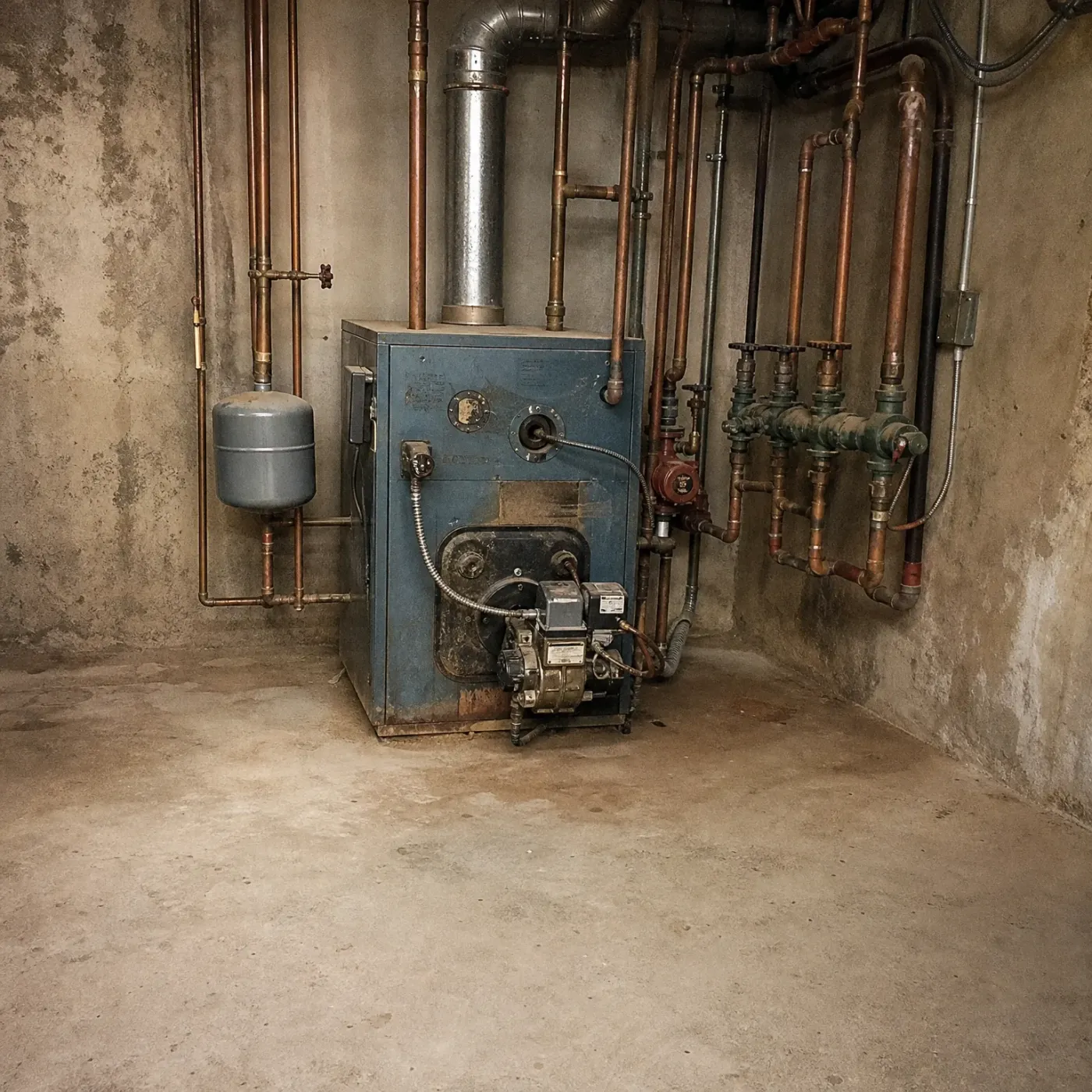
A blue oil-fired boiler with a burner unit sits on a concrete pad in a basement corner, with copper piping, valves and a gray expansion tank overhead against concrete block walls.

Where it starts to go wrong

Old black iron pipe and fittings like these corrode from the inside, and a joint can start weeping long before it fails outright. If this is what's under your house, a slow leak at one of those connections is often how it shows up first.

A man with grey hair and stubble in a dark sweater sits on a grey sofa indoors, looking off to the side, with a potted plant and a sunlit window behind him.
A man with gray hair, a beard and glasses, wearing a dark green sweater, sits on a gray sofa in a sunlit living room with a potted plant, table lamp and wooden sideboard behind him.
A middle-aged man with graying hair and a short beard sits on a blue sofa in a living room, looking toward a window, with a bookshelf, lamp and framed picture in the background.
A man with graying curly hair and a dark green sweater sits on a gray sofa in a sunlit living room, looking off to the side, with a framed picture, shelving, an armchair and a window with sheer curtains behind him.
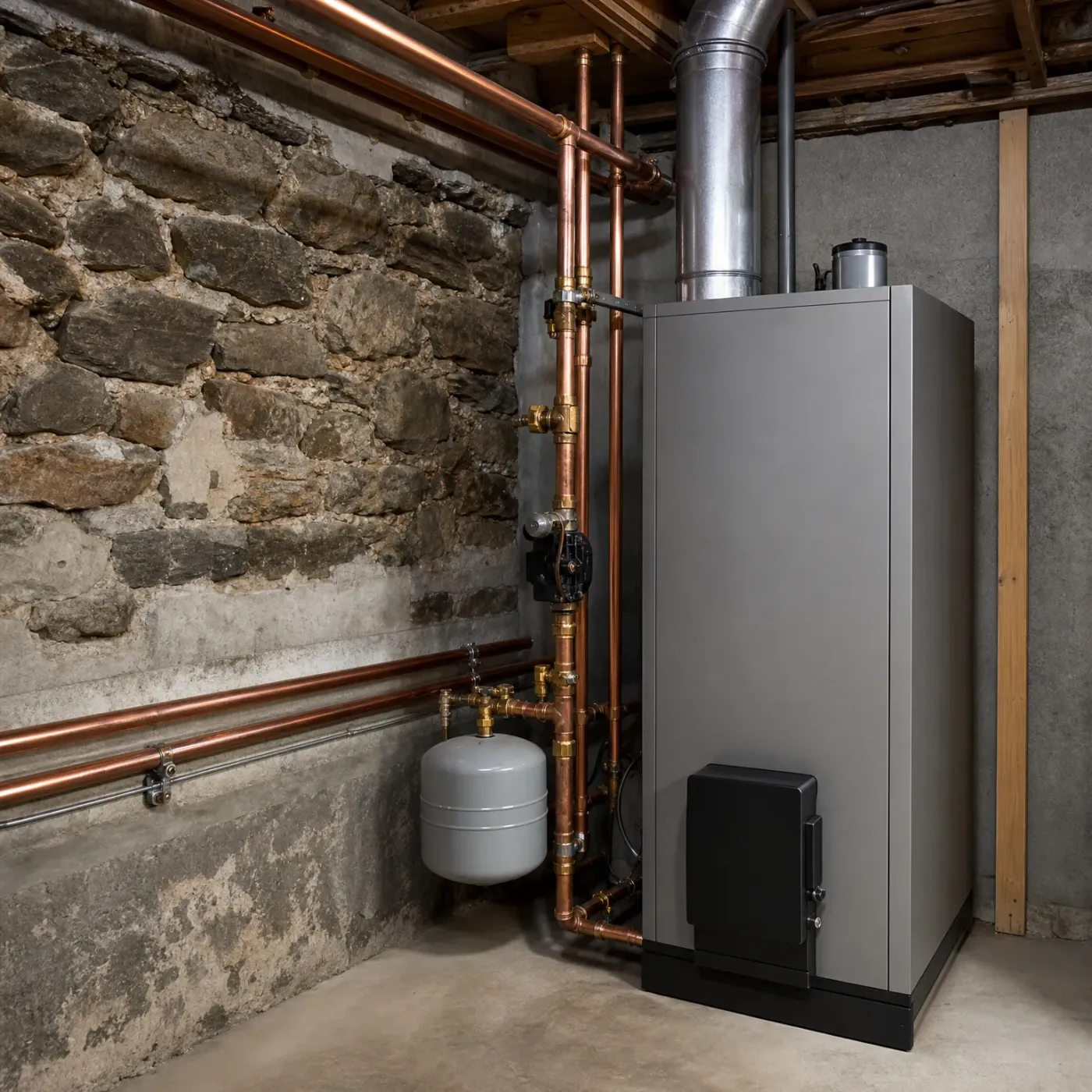
A gray boiler unit with a metal flue stands in a basement beside copper piping, valves and a small expansion tank, against a stone and concrete wall with wooden joists overhead.

Hand off the boiler problem

The pro who reaches out is licensed in New Mexico.

Send the request today and let a boiler pro reach out to you.

Hand it over

There's no charge for the request.

Why does my boiler only leak when the heat kicks on?

You've noticed the leak only shows up once the burner fires and the house starts warming up. The rest of the time, nothing. That pattern feels strange, like the boiler only misbehaves under pressure, which is closer to the truth than you might think. It's worth understanding why heat is the trigger before you decide what to do about it.

Heat raises the pressure, and that's what pushes the water out

Water expands as it heats. When the burner kicks on, the water in the system heats up and pressure climbs. The expansion tank is supposed to absorb that swing, giving the water somewhere to go so pressure stays steady. If the tank is waterlogged or the system is already running a bit high on pressure, that rise during heating is enough to push the pressure relief valve open, and it drips until the burner shuts off and things cool back down. A fitting that's barely holding can act the same way, staying sealed when the system is cold and giving under the extra pressure once it's running.

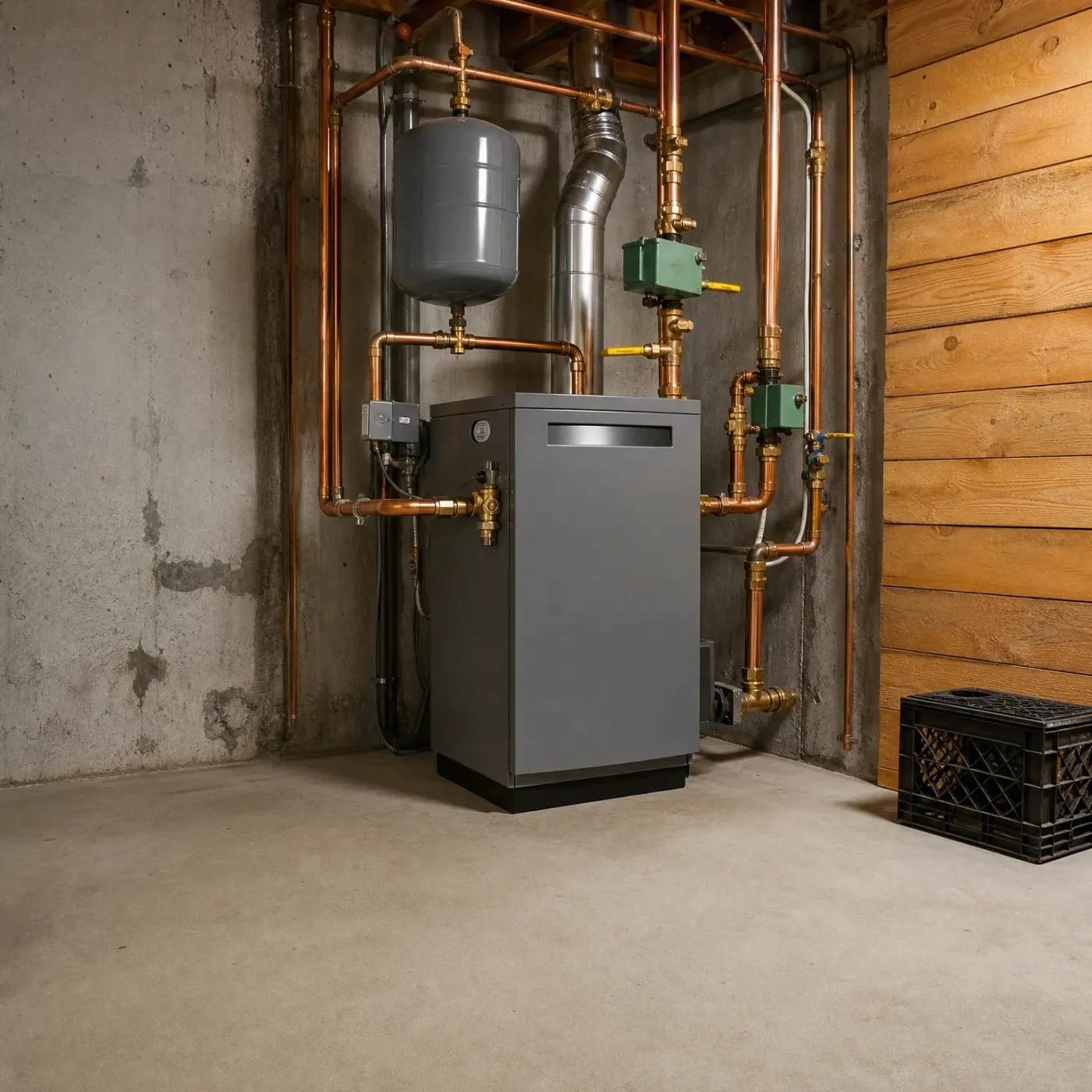
A gray boiler unit in a basement corner with copper piping, brass valves, a gray expansion tank, a metal flue duct, concrete walls and a wood-paneled wall, with a black plastic crate on the floor at right.

Working the way it should

A boiler like this holds pressure without drama. The copper fittings stay dry, the zone valves sit quiet, and the expansion tank takes up the slack as water heats up. Nothing drips onto the floor and nothing streaks the tank with rust.

An older blue boiler with a burner unit stands in a concrete basement corner, connected to copper and steel piping, valves and a gray expansion tank on the wall.

A boiler in trouble

Old shut-off valves and a galvanized flue like this one are worth a second look. Corrosion builds slowly at the joints, and a leak can start at a fitting you'd never guess without tracing the piping back. A boiler this old is worth having checked before the leak gets worse.

A woman with shoulder-length brown hair wearing a beige knit cardigan sits in a gray upholstered armchair near a window, looking off to the side with a slight smile, with bookshelves blurred in the background.
A woman with her hair in a bun holds a sleeping young child against her chest, both wrapped in a textured beige knit blanket on a sofa in a dimly lit room with a lamp, framed picture, and bookshelf behind them.
  1. Water in the system heats up and expands as the burner runs.

  2. The expansion tank absorbs that extra volume under normal pressure.

  3. A waterlogged tank or high fill pressure pushes pressure past the limit.

  4. The pressure relief valve opens to release water and drop pressure.

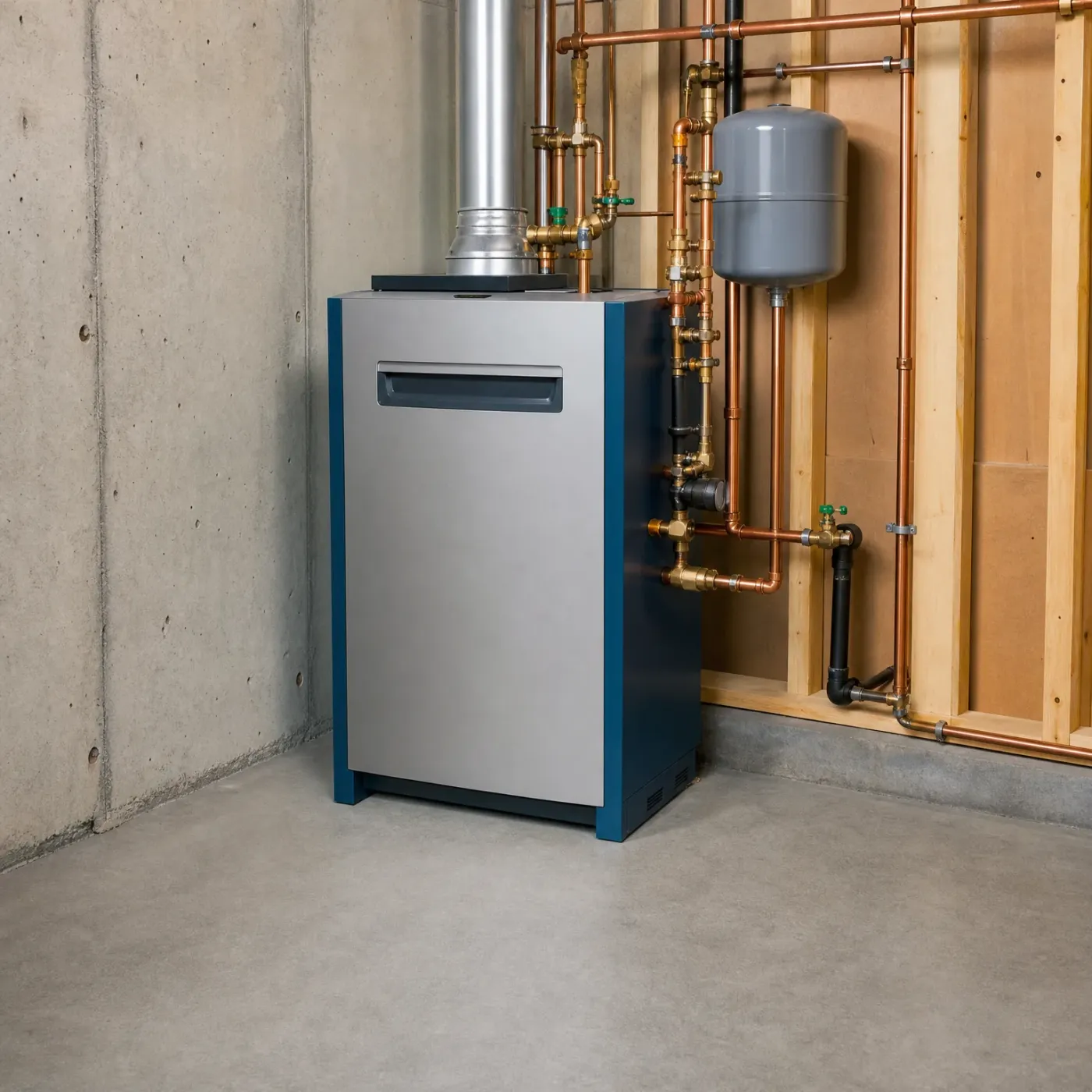
A gray and blue floor-standing boiler in a basement corner, with a metal flue pipe and copper and black piping, valves, and a gray expansion tank mounted on an unfinished wood-framed wall beside a concrete wall.
A boiler running right holds its pressure steady, with copper fittings staying dry and the expansion tank doing its job quietly in the corner.
A green oil-fired boiler with a flue pipe, burner and circulator pumps sits on a concrete pad in a basement corner, surrounded by copper piping and an expansion tank against concrete walls.
An oil-fired boiler like this still depends on tight joints and a working expansion tank, and a leak here often starts at a fitting along the wall.

Winter nights average 23°F statewide

Winter nights here average 23°F, and your boiler is working to keep up with that for months at a stretch. All that cycling puts real strain on fittings and the pressure relief valve, which is exactly where a leak tends to show up first.

NOAA nClimDiv 1991-2020 county normals weighted by homes

Where the leak points, and who to call

  • A boiler leak almost always traces back to pressure: a valve doing its job, a fitting that finally gave way, or an expansion tank that's lost its charge.
  • Dry fittings, steady pressure, and a relief valve that stays shut are what a boiler running right looks like, all winter long.
  • A licensed plumber local to New Mexico who works on boilers every winter knows which of these points tends to fail first and can check it directly.
  • Sending one request means one contractor calls, not a string of them competing for the job.
  • The leak won't fix itself, and water finding its way out now is the system telling you something inside it is already under strain.
  • Someone who services this equipment all season knows the difference between a valve venting normally and one that's failing.

Every path through this leads back to pressure. Something let go, a valve, a fitting, or a tank that stopped absorbing the swings in pressure the way it's supposed to, and water found a way out. That's true whether the drip shows up once a week or every time the burner fires. A boiler running right doesn't do this. Fittings stay dry, the relief valve stays shut unless pressure actually climbs too high, and the expansion tank quietly takes up the slack as the water heats. When any of that stops holding, the leak is the system's way of telling you.

Finding the actual cause means someone who's looked at this exact setup before, in homes around New Mexico, through winters that run the equipment hard for months at a stretch. A plumber who services boilers all season knows the difference between a valve venting the way it should and one that's already failing, and knows which of these points tends to go first in a system like yours. That's not guesswork from a stranger. It's a licensed plumber working local, who'll look at your pressure, your fittings, and your tank, and tell you plainly what's behind the water on your floor.

Send one request and one contractor calls. Not three or four companies working the phones against each other, just the one qualified to actually fix it.

Kitchen corner with cream upper cabinets, oak lower cabinets, white marble-look countertop, beige tile backsplash, a ceramic vase of greenery, a wooden cutting board and bowl, and a black-framed window at right.
Interior corner of a room with a white-framed window and wide sill, beige walls with panel molding, a wooden cabinet holding a ceramic vase with a green leafy plant, and blurred shrubs and trees outside.
A wood-framed armchair with beige cushions and a woven lumbar pillow sits in a corner beside a large window overlooking green trees, with a tall ceramic vase holding leafy branches on the left and plaster walls and wood flooring.
Interior corner with a white-framed window above a sill, beige walls with baseboard molding, a greige shaker-style cabinet with brass knobs and a potted plant on top, light wood flooring and a woven jute rug.
A dark-framed six-pane window with white trim and sill set in gray horizontal lap siding, with hydrangea shrubs below and a white column and shingled roof section at left.

One request and it's handed off

Only one pro gets your request, so you hear from one company.

Hand off my repair

You only hire the pro if you want to.